

Top Concurrent Fundraising Ideas to Maximize Revenue
Running concurrent fundraising projects can help your organization maximize its resources and gather increased support. Read for our top concurrent ideas.
Guest post by SchoolAuction.net
When it comes to raising money for your group, why settle for just one fundraiser when you can run several at the same time? By planning multiple events at once, you can welcome a larger fundraising impact and make the most of your donor engagement.
Combining different fundraising ideas allows you to tap into the power of giving people more options to support your cause, which not only helps raise more money but also engages several donor interests at once. In this quick guide, we’ll explore concurrent fundraising ideas that can save your organization time and money while maximizing your donor engagement opportunities. Let’s get started!
Live Auction and Raffle
Live auctions and raffles are a winning fundraising combination because live auctions cater to the thrill of bidding while raffles still appeal to those who’d like to win without the high risk. At a live auction, participants are kept on the edge of their seats by an auctioneer’s quick pace of selling prized items. Some supporters thrive in a live auction environment, while others might be intimidated or prefer to watch.
On the other hand, raffles are popular because they’re accessible to everyone. Unlike auctions, where the highest bidder wins, raffles give everyone who buys a ticket an equal chance to win, regardless of how much they can afford to spend. When deciding which item to raffle off, choose an auction item you’d normally sell at a silent auction and see if you can use a raffle to exceed the item’s fair market value.
Here are a few types of raffles organizations can run:
Standard raffle: Participants buy low-cost tickets for a chance to win a prize, with winners chosen at random from the pool of entries.
Golden ticket: This type of raffle offers a limited number of higher-priced tickets for a chance to win a high-value prize, typically the choice of any live auction item.
Tricky tray: Also known as a basket raffle, this involves participants buying tickets to place bids on baskets of items or services that are displayed on trays or tables. Each basket has its own mini raffle, with participants placing their tickets in containers next to the baskets they want to win.
Combining live auctions with raffles creates a dynamic fundraising duo that caters to a broad audience, blending the excitement of live bidding wars with the accessible, low-risk appeal of raffles.
Live Auction and Online Auction
Sometimes a live auction will leave you with more items than you originally planned. That’s okay, in this case, you can use it to your advantage by running an online auction afterward. SchoolAuction.net explains how this works—combine live and online auctions to maximize revenue. First, host an engaging live auction gala. Then once the event is over, host an online auction for the remaining items that were not bid on.
Here are the benefits of combining these two:
Maximized revenue: Combining the two auction types expands your bidder pool, allowing participants from different locations to bid. More bidders equals more revenue.
Less item waste: Items that didn’t sell at your in-person auction now get another chance to be sold during your online auction. Since online auctions allow for a broader audience to view and bid on items, this increases the likelihood of each item being sold.
Re-engaging donors: Combining a live auction with an online auction offers a dynamic and flexible participation experience, accommodating those who cannot attend in person but wish to contribute online. This can renew interest among previous donors by providing them with a convenient way to engage.
No need to plan a separate event: An organization can maximize fundraising efforts with this combination since it removes the need to plan and execute separate events, which reduces both logistical complexities and costs.
Combining live and online auctions is a strategic and efficient approach to enhance your fundraising. By leveraging both formats, you can capitalize on unsold items and expand the reach to a wider audience, in turn maximizing revenue.
Silent Auction and Entertainment Night
Planning an entertainment night alongside your silent auction is a great way to keep attendees engaged while they browse items. Silent auctions pair well with planned entertainment to boost funds and liven up the quieter atmosphere. Main entertainment ideas include music, a talent showcase, or a cause-related speaker or presentation.
However, you aren’t limited to solely relying on raising money through the silent auction. With the right software, you can also execute the following:
Online merchandise stores offer an additional revenue stream by giving supporters an option to purchase branded merchandise at their convenience. Merchandise from online stores also increases your organization’s visibility.
Text-to-Give allows supporters to contribute instantly with just a few taps on their cell phones.
Crowdfunding enables your organization to tap into the power of community fundraising and social sharing, reaching beyond your auction attendees to a wider audience.
By diversifying how funds are raised, nonprofits can capitalize on the enthusiasm of a live event to drive donations, while also capturing additional revenue opportunities from supporters at home.
Peer-to-Peer Fundraising and Matching Gifts
For nonprofits especially, matching gifts provide a game-changing opportunity to double the impact of donations. You can take advantage of them by partnering with a corporate sponsor or other philanthropic entity to run a matching gift donation challenge.
Then, you can launch your matching gift challenge with peer-to-peer fundraising to effectively combine the power of a community-driven platform with the financial leverage provided by corporate matching. 360MatchPro explains how you can get started in four steps:
Identify potential donors. Start by locating a generous corporate sponsor who will back your cause in exchange for public recognition. Look for a partner with a robust CSR program that shares the same values as your nonprofit.
Define the challenge’s terms and match ratio. Set the match ratio to define how much the corporate sponsor will give for every dollar individual donors contribute. For example, a 1:1 match ratio means the sponsor will match donations dollar for dollar, doubling every gift. Then, list out your challenge’s total fundraising goal and time frame.
Promote the challenge to your network using a dedicated website landing page. Use SMS messaging, email marketing, and social media outreach to link to your matching gift landing page. By using a multichannel marketing strategy, you’ll reach more donors and get your donations matched more quickly.
Track progress toward your fundraising goal. Update your supporters as more matches roll in to encourage them to reach your fundraising goal before the time runs out. You can do this with dedicated tracking tools to monitor real-time progress.
After your donation challenge comes to a close, don’t forget to follow up with the results and acknowledge the supporters who made it happen. Craft thoughtful emails, hand-written thank you cards, or social media shoutouts to recognize your donors’ generosity.
Running concurrent fundraisers significantly amplifies a nonprofit’s ability to engage different segments of its audience and maximize revenue. Be sure to assess your audience's preferences beforehand to tailor your fundraising strategy effectively.
The preceding post was provided by a guest author unaffiliated with DonationMatch. The views expressed within do not directly reflect the thoughts or opinions of DonationMatch.

Corporate Philanthropy: What Your Business Needs to Know
Discover how your business can leverage corporate philanthropy to increase employee engagement, secure customer loyalty, and positively promote your brand.

With social activism and ethical business practices taking center stage in national conversations, it makes sense that corporate social responsibility (CSR) and corporate philanthropy programs are on the rise. Instead of just selling valuable products and services, your business is now expected to take an active role in social causes.
In fact, according to a Cone Communications study on CSR, 63% of Americans hope businesses will take charge in driving social and environmental change in the absence of government regulation. Corporate philanthropy is increasingly becoming less of a “nice-to-have” offering and more of a “must-have” element for businesses to keep up with consumer desires.
But while your organization may be facing pressure to implement these programs, you don’t have to view them as a burden. In fact, if implemented correctly, your corporate philanthropy programs can be a driving force for customer loyalty, cause marketing, brand awareness, and employee engagement.
This guide will provide a roadmap for marketing managers, community giving managers, and HR professionals taking the dive into the world of corporate philanthropy. You’ll not only learn what corporate philanthropy is and its different types, but how to start a successful CSR program of your own by going over the key essentials of CSR, including:
No matter your business’s products or services, these strategies should help you take action and launch your own robust corporate philanthropy program. Let’s get started with a brief overview of what corporate philanthropy is and what it might look like for your business!

What is Corporate Philanthropy?
Corporate philanthropy is the voluntary actions that businesses take to improve their impact on the environment, their communities, and society at large. These programs have become incredibly popular in the business sector, with over $21 billion in corporate gifts given to nonprofits last year alone.
This may seem like a hefty investment to please your customers, but the benefits of corporate philanthropy go far beyond presenting a positive image for your business.
For instance, corporate philanthropy can provide an essential boost to your employee engagement rates. Over 71% of employees say it is imperative or very important to work at a business where the culture supports giving and volunteering.
This statistic might seem surprising if your idea of corporate philanthropy is just cutting a check to a local charity. For many people, the first idea that comes to mind when thinking of philanthropy is a cash donation. But there are a variety of different corporate giving programs that provide aid to nonprofits in different ways—which we’ll later discuss in more depth.

How Corporate Philanthropy Benefits Businesses

You may wonder if the cost of investing in corporate philanthropy is worth the benefits. After all, every single one of the corporate philanthropy programs we’ve discussed, with the exception of in-kind donations, involves donating money to an organization without necessarily receiving anything tangible in exchange.
So, how can corporate philanthropy strengthen your business and earn back its return on investment?
In addition to providing crucial support to worthy causes in your community, corporate philanthropy offers businesses many advantages such as:
Increased employee engagement. As mentioned earlier, corporate philanthropy can significantly improve employee engagement and retention rates. This Re:Charity report on corporate giving shows that employees who engage in corporate giving programs tend to have 75% longer tenures with their employers. The message is clear: your employees want to be a part of a business that improves their communities and creates change beyond the walls of their office. Your corporate philanthropy programs aren’t just for public vanity—they can and do create real, positive changes in your work environment’s quality and overall team member satisfaction.
Better engagement with customers. In an age when mass media is instantly available at everyone’s fingertips, customers have become increasingly mindful of the companies they support through their purchases. As quickly as bad news about a company will spread, good news about your company’s involvement in charitable causes will also reach customers. In fact, 87% of customers will purchase a product because a company advocated for an issue they care about.
A marketing and reputation boost. When you partner with nonprofits and other charitable organizations, you can expand your marketing reach. These joint efforts, such as charitable events or fundraisers, expose both of your organizations to audiences that may have otherwise been difficult to reach. Additionally, these activities can lead community members to view your organization as a philanthropically-minded force for good. For example, this America’s Charities workplace giving survey shows that 69% of respondents reported increased sales after launching CSR programs.
Creating an effective cooperative giving program may require a bit of investment, but it will more than make up for the initial planning and donations required to keep these initiatives running.
For example, Six Flags North America has used its corporate philanthropy program to engage employees, partner with community leaders, and create a sense of customer loyalty that will last a lifetime. From its Project 6 program to its Make-a-Wish sponsorship, Six Flags has leveraged the power of in-kind donations to share thrilling theme park experiences with children and community members in need, cementing itself as a pillar of social good in its communities.

Types of Corporate Philanthropy
Corporate philanthropy programs can vary widely depending on a business’s industry and community engagement goals. Just as each business’s day-to-day operations, products, and services are different, every corporate philanthropy program will work differently.
That being said, there are several common corporate philanthropy initiatives, including:
Monetary Donations
DIRECT MONETARY DONATIONS
Direct monetary donations, sometimes structured as grants, are payments that your organization makes to nonprofits. This is one of the most common and straightforward forms of corporate philanthropy.
Direction donations can be as simple as writing a check to a charity. Alternatively, you could partner to contribute a portion of your sales during a given time period to a designated nonprofit or host an ongoing donation drive.
MATCHING GIFTS
Matching gifts are donations that businesses make to match their employee’s monetary contributions to charitable causes. This allows you to engage your employees on a one-on-one basis, showing support and giving to organizations that each of them finds personally important.
The process of actually facilitating these matching gifts is usually a shared, online exchange between your matching gift system and the nonprofit’s matching gift database software, where:
Your employee logs into the nonprofit’s donation page to submit their gift.
Employees search for your company’s matching gift form through the matching gift database embedded in the donation page.
Employees can automatically submit a request for you to match their donation.
The ratio and maximum amount of these matches vary for each organization. For example, many businesses offer 1:1 matches, but some provide 2:1 or even 3:1 matches.
However you go about setting up your match ratio or your matching gift form, just be sure to make sure that employees know about the program!
SPONSORSHIPS
Corporate sponsorships are a form of corporate philanthropy where your business supports a nonprofit during an event or specific fundraising effort.
This time-based type of philanthropy is flexible and can be mixed and matched with other philanthropic initiatives, such as a holiday direct donation campaign, to build up a more concentrated wave of support. Consider implementing sponsorships into your current corporate philanthropy program to complement and enhance your other campaigns.
In-Kind Donations
IN-KIND DONATIONS
In-kind donations are the donation of goods, experiences, or services rather than money.
For example, DonationMatch has helped many product-based businesses donate their extra inventory and product samples to charity events, turning unnecessary overhead into a marketing opportunity.
On the nonprofit side of the engagement, these charitable organizations are able to get in touch with businesses and immediately receive valuable or otherwise unattainable items that can be put directly towards fundraising for their mission.
Even businesses that don’t sell physical products, such as the Chicago Museum of Contemporary Art, have been able to participate in in-kind giving by donating tours, tickets, and valuable experiences to local community programs.

SPONSORSHIPS
As we mentioned, corporate sponsorships involve your business offering support to a nonprofit during a specific event, campaign, or project. For instance, you might donate dining gift certificates to be put up for bid at a charity auction or send employee volunteers to help facilitate a 5K.
Corporate sponsorships intersect with several other types of corporate philanthropy. For example, donating those auctionable gift certificates would count as both a sponsorship and an in-kind donation program.
You can pair corporate sponsorships with all of the other types of corporate philanthropy on this list to create a concentrated, time-sensitive campaign that will bring attention to your philanthropic efforts.
talent donations
VOLUNTEER GRANTS
Volunteer grants are contributions that employers make to nonprofits that their employees have volunteered with for a specific amount of time.
Volunteer grants, volunteer grant funds, or dollars for doers programs are a particularly effective way to engage your employees, rewarding them for actively helping charitable missions.

No matter the most compatible corporate philanthropy program, be sure to choose one or two well-suited nonprofits with which to create ongoing partnerships. As you learn more about your nonprofit partners, you can understand what types of donations and giving initiatives are most helpful for them.
Additionally, partner with charitable causes that align with your business’s mission or sector. Doing so will help create a more consistent, positive public reception of your brand. Before getting started, be sure that your business has the right tools to find the best nonprofits for your philanthropic partnership.

5 Steps to Create a Corporate Philanthropy Program
Launching your own corporate philanthropy program can be difficult without a bit of guidance. The DonationMatch team has had years of experience organizing and facilitating in-kind corporate philanthropy initiatives for businesses, and with these fundamental strategies, you should be well on your way to starting your own program:

1. Establish your goals.
Before you decide what type of corporate philanthropy program to pursue, you need to establish your CSR campaign goals. Think about what you’re hoping to gain from your campaigns, such as increased employee engagement or a reputational boost. Only then can you really begin to build out your corporate philanthropy program.
Here’s how you should walk through the goal-setting process:
Determine target benefits. What are you looking for in your CSR program—employee engagement? Brand exposure through cause marketing?
Assess CSR strategy’s compatibility with your business. How does the giving program you’re considering help you achieve the goals in step 1? Are there other types of corporate philanthropy that might be more beneficial for your target goals?
Establish specific return on investment markers. In other words, figure out what specific key performance indicators (KPIs) you can measure to assess whether your program is doing well. We’ll touch more on this later.
For example, if your main goal is to create a more active and more public partnership of giving between your business and community organizations, then an in-kind donation program may be the best fit for you. By contrast, if you want to improve employee engagement, then a matching gifts or volunteer grant program may provide better results.
2. Gather the necessary technology.
Gathering the right tools is a must for building your corporate philanthropy program. While smaller businesses may be able to run a rudimentary corporate giving program through manual means, CSR software tools can optimize your campaigns and maximize their effectiveness.
To ensure that your program will run smoothly, reach the widest possible audience, and facilitate relationships with the right nonprofits, invest in these software solutions:
In-kind donation portal. There are thousands of charitable organizations and nonprofits that are eager for your donations. However, qualifying and choosing organizations that are well-suited for your program is a far greater challenge. Fortunately, an in-kind donation platform can help. This tool allows you to cut through the clutter and match your business with qualified nonprofits that meet the specific criteria that you’ve entered, which may include location, cause type, and supporter demographics that match your own customers.
Communication platforms. How you communicate with your customers and employees about your philanthropic initiatives can determine your program’s success. For example, a volunteer grant program won’t succeed if no one in your organization is aware that you are offering grants. Leverage communication platforms, such as your email marketing tools and social media strategies, to promote these opportunities.
A tracking and reporting system. Data tracking and data reportage are two of the most fundamental tools necessary for tracking your program’s performance. This data will show you where your program can improve and where you’re doing well. For instance, tracking data for your in-kind giving program will allow you to determine which nonprofit partnerships have been the most rewarding and what products you should continue to allocate to your partners.
Investing in these tools may seem like a costly investment. Fortunately, there are comprehensive platforms that can help you achieve all of these goals.
For example, the DonationMatch platform is able to automate and streamline nearly every step of the in-kind giving process, from partnership matching to facilitating donations and performance tracking.
When you begin searching for your own corporate giving tools, look for effective, turnkey platforms that centralize all of these features into one or two powerful solutions.
3. Connect with nonprofit partners.
Finding nonprofit partners that fit your corporate giving goals can be a challenge.
The number of nonprofits you want to engage will greatly influence the reach and depth of your campaigns.
Here are a few key features you should consider when choosing your nonprofit partner:
Years in operation
Community reach and impact
How their mission aligns with your business
Past corporations they’ve partnered with
What types of programs they might be open to
If a deeper, long-lasting, integrated relationship is desired, take your time to choose the right partner and foster a relationship. If you want to maximize brand visibility and reach, then engaging more organizations with a turnkey program will be more effective. The beauty of these programs is that you can do both. For instance, as we mentioned earlier, Six Flags North America chose to partner with Make a Wish to nurture a robust and highly beneficial relationship over years, yet continues to donate tickets to thousands of charity fundraisers each year.
4. Build excitement around your initiatives.
Your corporate philanthropy programs may serve a practical purpose, but that doesn’t mean that they can’t be fun and engaging. In fact, that’s one of their most important benefits!
Stir up excitement amongst your employees and customers by:
Gathering employer and customer feedback
Promoting your initiatives during team gatherings
Creating an employee and/or customer-led corporate philanthropy council
Sharing information about your programs on your company website
This will help to better guarantee that your programs will perform successfully and make the most positive impact!
5. Track your progress.
We’ve said it once and we’ll say it again: data tracking is one of the most fundamental parts of running an effective corporate philanthropy program. How else will you know how to avert failure or repeat the success of past campaigns?
Track the following key statistics to help measure the impact of your program and the level of engagement:
Total contributions annually
Participation rates (such as who took advantage of matching gifts!)
Changes in rates of employee retention and overall satisfaction
Changes in rates of customer retention and overall satisfaction
Changes in sales and net revenue
Changes in sources of new customers
Associated costs, savings, and ROI
Expressed feedback and appreciation for giving programs (through survey responses)
These essential metrics should give you a good starting point, but you’ll want to sit down with your team to decide what data points from your campaigns you should focus on. After all, your own corporate philanthropy is unique, and will have its own unique goals and objectives.
Wrapping Up
Appealing to your customer base, engaging employees, and positively promoting your business are worthwhile goals to strive for. The social changes that have begun to rock the corporate world have only accelerated the rise of corporate social responsibility as a necessary cornerstone of your business practices.
With this guide and the right, intuitive corporate giving tools, take your business one step closer to launching your own effective corporate philanthropy program.
For more information on corporate philanthropy, different CSR programs, and DonationMatch’s solution to corporate philanthropy, check out these additional resources:
Top 3 Things Donating Can Do For Your Business. Take a deeper look into the benefits of corporate giving and how it can generate greater exposure, customer loyalty, and even increased revenue for your company.
Corporate Philanthropy Made Easy — DonationMatch. DonationMatch is dedicated to your corporate philanthropy endeavors. Explore how our turnkey platform has revolutionized the in-kind donation process.
Workplace Giving: Explore Matching Gifts From the Other Side. Employee engagement is a high priority for all corporate philanthropy programs. Dive into tips, tools, and software solutions to initiate your workplace giving campaigns and engage employees.


5 Ideas to Launch Your Next Data-Driven Marketing Campaign
After conducting data research, it’s time to put your insights into action. Here are five ideas for kickstarting your next data-driven marketing campaign.
Guest post by Gabrielle Perham, Director of Marketing for AccuData Integrated Marketing
As a nonprofit fundraising professional, you know the importance of understanding your target audience. By tuning in to what makes donors tick, you can craft outreach materials that are more likely to resonate with them.
One of the most effective ways to get to know donors on a deeper level is to dive into your data. With data marketing, you can take a categorical approach to donor management and stewardship using information that you know to be true, rather than guesses.
There are a few different ways to put your donor data research into practice to launch a successful marketing campaign. Use these tips to kickstart your next campaign:
Take a more strategic approach to your email campaigns.
Give digital targeting a try.
Revamp your direct mail strategy.
Refine your supporter segmentation practices.
Put your prospect research to use.
Data marketing opens up untapped opportunities for your organization to explore. It allows you to tailor your marketing materials to align with your audience’s interests and preferences. Whether you’re looking to raise awareness of your nonprofit or launch a full-fledged fundraising campaign, these tips will help you make the most of your donor data.
1. Take a more strategic approach to your email campaigns.
Email marketing has quickly advanced in the past several years. A basic email strategy will no longer cut it. If your email approach is generic or lackluster, your supporters will send your messages right to the trash. In addition, upcoming changes related to consumer privacy mean that emails will have a harder time making it to the inbox.
Whether you’re looking to promote an upcoming fundraising event or initiative, engage donors in your monthly giving program, or promote another aspect of your fundraising efforts, you can kick off your campaign with an acquisition email marketing strategy.
Acquisition email marketing is the process of engaging new supporters using email communications. If you’re interested in kickstarting your next data-driven marketing initiative with an email acquisition campaign, there are a few best practices to keep in mind:
Craft your ideal audience with the help of a data marketing firm. You can build your organization’s database by partnering with a dedicated data marketing provider. These specialists help organizations craft their ideal target audience using prospect lists. Prospect lists are lists of potential supporters who are most likely to be interested in your cause.
Send prompt welcome emails to prospects. Whenever a supporter signs up for your email list, send a warm welcome email thanking them for their support.
Re-engage lapsed audience members. If certain prospects open your emails less frequently, reach out to them with a targeted message to win back their support. For example, you might send an email along the lines of “We missed you! Here’s what’s been happening since we last talked.”
With a strategic email approach, you can capture your audience members’ attention, especially your millennial audience. Don’t underestimate the power of email marketing — you can use this channel to speak directly to supporters and maintain their support.
2. Give digital targeting a try.
Did you know you could send digital advertising to individuals based on their home address? IP Targeting/Addressable Geofencing is the process of identifying and marketing to audience members based on their physical location.
According to AccuData’s guide to IP targeting, this process is an effective way to put your data research to use. You can pinpoint your organization's exact target audience based on their physical location and get your marketing materials directly in the palms of their hands.
You can use IP Targeting/Addressable Geofencing to access supporters on a certain network. Let’s say you’re looking to ramp up your marketing campaign ahead of your nonprofit’s next local donation drive, and you’re specifically seeking donations from college-aged students. Using these digital targeting techniques, you can market your event to individuals who access the network of a local college. You can do this by sending digital advertisements to all devices on the university’s network.
When conducting digital targeting strategies, keep these best practices in mind:
Don’t over-target. Keep your specifications for the audience members you are targeting to just two or three parameters. This ensures that you’re casting a wide enough net and not excluding valuable supporters.
Use A/B testing to refine your ads. A/B testing is the process of creating two ad campaigns with slight variations and determining which receives more engagement. In the context of digital targeting, you can change your audience parameters to determine which segments engage the most with your outreach.
Deploy effective ad copy. Even if you reach your target audience, they won’t respond to your messaging if it’s not compelling. Ensure your ad copy is streamlined and inspirational. You can also use A/B testing to create different versions of your ads and assess which is more effective.
This is another area where working with a data marketing firm can provide a boost to your strategy. Digital targeting is a more advanced marketing strategy, but it can be highly effective for reaching your desired audience.
3. Revamp your direct mail strategy.
Although it might seem old-school, direct mail is still a highly effective marketing channel for nonprofits. Direct outreach campaigns that combine direct mail with at least one digital media element have a 118% increase in response rate.
Using your supporter data, you can revamp your direct mail strategy to only reach out to those who are most likely to engage with your content. This can decrease direct mail expenses significantly, as you won’t be sending mailers to individuals who are unlikely to respond.
For your next data-driven marketing campaign, pursue a combination of a housefile campaign and a prospect campaign:
A housefile campaign involves sending direct mail to addresses already in your database. Marketing experts recommend starting your direct mail campaign with a housefile effort because it has a higher chance of success. You can reinforce and grow relationships with your existing audience.
A prospecting campaign involves sending mail to audience members who don’t have a previous relationship with your nonprofit. The objective of prospecting campaigns is to establish contact with those who are most likely to support your organization. This allows you to add more supporters’ information to your in-house database, growing your audience.
Use your digital marketing efforts to supplement and support your direct mail campaign and vice versa. For instance, include a QR code on your direct mail materials that sends audience members to your website or online giving page.
Additionally, you should use uniform branding across all marketing materials to promote cohesion and unity with your marketing strategy. Doing so helps you foster greater brand recognition and awareness.
4. Refine your supporter segmentation practices.
Donor segmentation is the process of grouping supporters based on shared characteristics.
The point of supporter segmentation is breaking your audience into smaller categories and marketing to them based on their unique circumstances or preferences.
There are plenty of different options for grouping your donors based on your nonprofit’s marketing and fundraising goals. You may choose to group them based on their:
Engagement type: You may have audience members who are donors, volunteers, advocates, or peer-to-peer fundraisers. Grouping supporters by engagement type allows you to send messages with information that each group is more likely to be interested in.
Demographics: Depending on your marketing goals, it may be helpful to divide audience members into categories based on demographics, such as age, gender, or location.
Communication preferences: You can segment supporters based on their preferred communication platforms and frequency. You may find some supporters prefer digital platforms, while others favor direct mail or phone outreach.
Engagement frequency: You likely have donors who give regularly, such as your monthly donors, along with those who give more infrequently. Most nonprofits also have plenty of lapsed donors who have gone longer without giving. Segmenting supporters based on how frequently you hear from them allows you to craft different stewardship strategies for each level of engagement.
You can tie advanced supporter segmentation strategies into your next fundraising or marketing campaign. These techniques can be used on multiple platforms, from your direct mail outreach to your email marketing campaigns.
5. Put your prospect research to use.
Prospect research is the process of identifying audience members who may or may not have a relationship with your organization yet, but who exhibit characteristics that indicate they would be willing and able to donate to your cause.
Approaching your next data-driven marketing campaign through a prospect research lens offers many benefits. You can use prospect research to identify opportunities for:
In-kind donations: Using prospect research, you can identify audience members who work for companies that offer in-kind donations or other forms of corporate giving. Then, you can specifically reach out to these individuals and encourage them to donate or participate. Your organization will benefit from greater access to necessary goods or services that support your mission.
Matching gifts: Similarly, prospect research can reveal supporters who work for companies that offer matching gifts. According to Double the Donation’s corporate matching gifts guide, these programs involve companies pledging to match donations that their employees make to eligible nonprofits. Matching gifts allow your supporters to maximize the impact of their single donations and provide your organization with a funding boost. You can reach out to individuals who have made match-eligible donations and encourage them to begin the gift match process.
Major gifts: You can also use prospect research to identify audience members with a greater level of wealth and a high affinity for your organization. Search for individuals who exhibit certain wealth indicators such as stock ownership, real estate holdings, or a higher-up job title. Then, craft a dedicated strategy specifically for reaching out to and stewarding major donors.
When you conduct your data-driven marketing campaigns through the lens of prospect research, you can save your organization time and money because you’re sending marketing materials to those who are actually interested and willing to give.
By focusing on wealthier prospects or those whose companies offer corporate philanthropy programs, you can refine your marketing outreach efforts even more and create messages that resonate with these specific audiences.
There are plenty of ways to incorporate data-driven marketing strategies into your next campaign, from firing up your email approach to segmenting your audience for more targeted outreach. Consider your organization’s goals and needs to choose the best idea for launching your next campaign. A combination of these strategies will provide your organization with the reach it needs to market your cause effectively. Good luck!
About the Author:

Gabrielle Perham, MBA, Director of Marketing
Gabrielle is the Director of Marketing for AccuData Integrated Marketing. She joined the organization in 2017 and possesses more than 15 years of experience in strategic marketing, branding, communications, and digital marketing. She earned a B.S. in Marketing and an M.B.A in Marketing Management from the University of Tampa.
San Diego Business & Nonprofit Crisis Support Network
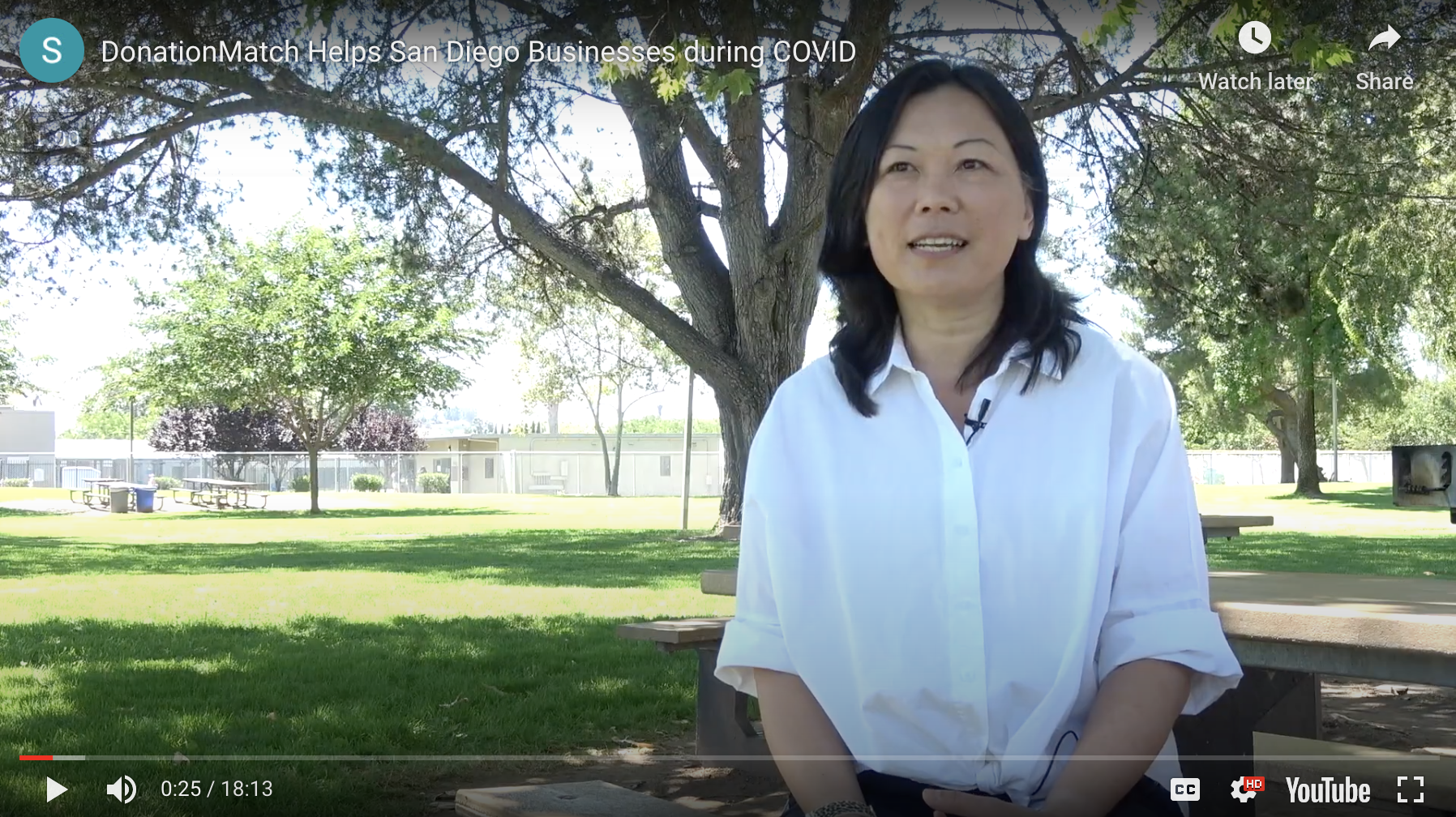
Thank you fo the San Diego Business & Nonprofit Crisis Support Network for aggregating resources for local organizations. Their spotlight video highlighted DonationMatch Co-founder Renee Zau, who is offering pro bono services of up to an hour per organization (business or nonprofit) to assist with in-kind (unpaid) marketing strategy and fundraising event coaching as we adjust and recover from COVID-19. To apply, use the link in the Free Consultants and Coaches section of the San Diego Business & Nonprofit Crisis Support Network website.
5 Podcasts for Charity Fundraising Advice

As a nonprofit professional (or professional volunteer), hosting a charity fundraiser is a lot of work. It requires organizing, marketing, event planning, sales, people management, and so much more. As fundraisers, we are always looking for improved methods for making our events more cost-effective and profitable. Here are 5 podcasts to help make the efforts of a nonprofit event planner a little easier, or more effective. These podcasts are in no particular order and range from 30 minutes to over an hour in length per episode. It can be great to fit in these helpful tips during a lunch break, long drive, or even during a daily workout routine.
1. The Classy Podcast
This weekly podcast has stories from leading founders and executives in the social sector who hope to inspire the next generation seeking to drive change.
2. Events with Benefits
Hosted by three longtime event fundraising professionals with 50+ years of combined experience, this podcast seeks to help nonprofits achieve greater success in their fundraising events with less effort. The episodes feature special guests from all different sectors of the nonprofit industry who share their biggest lessons learned, including nonprofit attorneys, directors of events that raise over $1 million or more, benefit auctioneers, and technology companies.
3. CauseTalk Radio: The Cause Marketing Podcast
This weekly podcast, hosted by Joe Waters and Megan Strand, keeps you up to date on the world of cause marketing. The podcast covers trends, tactics and news related to cause marketing and corporate-nonprofit partnerships.
4. Driving Participation Podcast
This podcast talks with marketers, fundraisers and consultants in order to explore what’s been successful for schools, nonprofits, and associations, in order to attract the right people, maintain their excitement, and encourage them to give back.
5. Raise and Engage
This podcast if for nonprofit professionals and covers the latest trends and hot topics. With people speaking from the social good community, it’s designed to help listeners in doing more for their cause.
Questions To Ask When Holding an “In-Store Fundraiser”

In-store fundraisers (a.k.a. on-site fundraisers, restaurant nights, or giveback campaigns) can be a lot of fun and excitement for both hosting venues and the organizations inviting supporters to dine or shop. Before doing one for the first time with a new venue or organization, it's a good idea to get these details clarified in order to set expectations for both sides.
1. What percentage of sales will be donated to the charity?
It is quite common for a store or restaurant to donate around 15%-25% of sales, or a specific dollar amount per package or service sold. However, percentages can vary, and there could be exclusions, such as alcohol, gift cards, or specific product lines. Make sure to confirm the timeline of the event, whether donations will apply to sales all day or only during certain hours, and if there is a minimum number of guests or total sales required for payout.
2. Can the event be held over the weekend?
It is very common for a restaurant to hold giveback fundraisers between Sunday-Thursday, so as to avoid their busiest times during weekends. Stores may have similar policies depending on their sales and other special events as well. Consider exploring other creative options, such as a late brunch or early lunch for a restaurant not normally open in the morning, or even longer-term fundraisers focusing on online or gift card sales for up to a month or more.
3. Will the percentage donated include all sales, or only those from guests referred by the organization?
Be sure to clarify whether the percentage of sales to be donated will be limited to only those who bring in a specific flyer, use a code, or mention the recipient organization, or all sales during the time period. It is also best to find out whether coupons and other promotions can be used during your event and/or affect the amounts you earn.
4. Does the percentage of sales include both food and drink items? Does this include alcoholic drinks as well?
Depending on the restaurant, venues may only donate a percentage of food sold, some include both food and non-alcoholic drink sales, while others will donate a percentage of everything sold. Partnering to create a signature drink or dessert for the event can also drive additional sales-based donations.
5. How will the business help market the event? And what type of promotions can the organization do?
What marketing materials will the restaurant provide to the organization? It’s important to think ahead about how to make promotion easier through social media, flyers, e-mail newsletters, message boards, and online calendars. It is common for a restaurant to provide the charity with a flyer to be used for tracking sales and promotion. However, many businesses will not allow the charity to distribute the flyer immediately outside the venue during the time of the event, such as in the parking lot, so it's necessary to market the event in advance. If the fundraiser is at a store or boutique, find out if shoppers can arrive early and put items on hold to purchase during the event. Ask also if purchases can be made online, which would invite sales from out-of-towners.
7. How can the event be personalized?
One of the best ways to increase event attendance and traffic is to be creative and feature something unique, such as teachers cooking or serving food; an officer, director, or the school band performing; a special discount; or a raffle for a coveted prize or experience, donated by the venue in conjunction with the charity. If there are any limitations based on insurance or capacity, be sure to figure those out ahead of time, too!
6. How will the organization receive the donation?
After all sales are tallied, when and how will the organization be receiving the donation? It’s common for a restaurant to prepare a check for pickup within a few weeks from the date of the event, mail it, or even electronically deposit the funds into the organization's account. Some states have deadlines for how quickly funds must be transferred, so it's always a good idea to refer to your state's Attorney General's office for help.
**********
Great partnerships begin with a clear understanding of what each partner brings and what to expect. We hope these ideas enable you to ask the right questions, clarify details, get creative, drive more sales, and raise more money!
DonationMatch Launches GiveBack Program for In-Store Fundraising
The team here at DonationMatch is thrilled to announce that we recently launched a new online platform, The DonationMatch GiveBack Program! This new product connects restaurants and stores with nonprofit organizations to host in-store fundraisers. The GiveBack Program will be offered as a feature on our main platform, DonationMatch.com.
The GiveBack program was created to help any restaurant, brewery, winery, store, service, or online company looking to donate a percentage of sales to nonprofits and causes. The platform makes companies available to causes that are seeking fundraising options, providing easier scheduling and marketing for the businesses.
Restaurant fundraisers are popular events for charities and schools, because a percentage of the sales earned during that night are donated to a nonprofit hosting the event. Fundraisers have also been shown to be a great marketing tactic for businesses, by providing another method for gaining new clients and sales, while giving back to the local community.
The DonationMatch GiveBack tool contains many exciting features to assist with organizing an in-restaurant fundraiser. Some of the program features include:
Giving local fundraising leaders direct access to eligible programs
Easy event scheduling
Online marketing tools
Event tracking and reporting
Customizable automated reminders and workflow tools
Detailed records of event fundraising history
Ability for companies to view event fundraising records for donation decisions
Through the easy-to-use platform, restaurants can receive fundraiser requests, be able to provide event promotional tools to charities, and view analytics post-event.
“We are very excited to launch our latest product, the DonationMatch GiveBack Program, said Renee Zau, CEO at DonationMatch. “Current DonationMatch clients had expressed a need for a tool that efficiently manages and streamlines the process of hosting restaurant fundraisers.” Companies who contributed to the design and creation of the GiveBack program include: Buffalo Wild Wings, Dream Dinners, Picaboo, and Henebery Whiskey.
Zau is pleased to launch the GiveBack Program to provide even more functionality to the DonationMatch platform. Companies interested in trying out the new platform can sign up online through DonationMatch.com and may begin using the Starter option free of charge.
About DonationMatch: DonationMatch is a social enterprise that creates online cause marketing software for companies and nonprofit organizations. Since 2010, DonationMatch has facilitated in-kind gifts worth more than $34 million. Co-founded and led by CEO Renee Zau, DonationMatch was recently named to the SheEO "Top 25 Ventures" list for U.S.-based companies in 2017.
The New & Improved DonationMatch is Here!

By Renee Zau, CEO of DonationMatch
After a year of gathering feedback from current members, supporters, UX experts, mentors, partners, and more members, we are excited to announce that the new and improved DonationMatch platform is here! We hope you're having a great start to 2016, and this makes it better.
There were quite a few ideas which were weren't able to squeeze in (Rick and Tim especially, thanks for your invaluable input), so keep an eye out for even more bonuses to be released over the next year.
For now, here are some highlights of what's new:
A New Look
Our new design hails from switching our CMS (content management system), which meant selecting a new template, framework, and our ever-hardworking CTO Darryl rewriting the entire site from scratch.

Menus are now on the left of the dashboard. These should look familiar (companies will see "Find Events" and "My Items" in lieu of Find Donations and My Events, respectively); general workflows are the same.
The dashboard remains your starting point, with messages and other to-do's now organized into highlighted sections, and with activity stats (and *new* organization totals, too) below.
No More Usernames
Log in with just your email address and password--easy peasy! All profiles using with the same email address will be accessible with the same login information. This means you can...
Switch Between Profiles Easily
Once logged in, you'll see the dashboard of the last "organization" (nonprofit or company) you managed. If you represent more than one organization, switching between them takes just a click in the upper right corner (name/arrow) and selecting the profile you want to manage next.
Adding organizations to represent = no extra logins! (Verification process still applies.)
See All Unread Messages In One Place
Inbox too full? There's now an easier way to handle private messages. In addition to message previews on your dashboard, you can also click "See New Messages" in your To-Do area to see matches with unread messages on one easy, sortable list. Also new is that each is timestamped with date/time sent.

New showcase pages
Show Off Your Good Work
Every organization now gets a showcase page to publicly share with others. It includes links to your website, social media accounts, and the most popular information from your profile. Use this promotional page to boost awareness about your charitable activity--it's even one-click shareable!
How do you find your showcase page URL? Click on "My Profile" to see your page. Copy the "https://..." link address from the navigation bar and share it--and your praiseworthy work --with others!
(For Nonprofits) Add Referral Codes Provided by Companies
Given a DonationMatch referral code by a charitable company? You can now add codes yourself through "My Account" to ensure you reap the benefits of being their direct referral.
What's on YOUR wish list for a web-based donation system? Tell us in the comments below, and come to www.donationmatch.com (or register if you're new) to see how these our platform's new features can knock even more time off the event planning process!
Engaging Millennials: Don't Give Up on Your Email Marketing!

By Juliet Davenport, Nonprofit Ambassador at DonationMatch
Do you remember being awed by the answering machine? (Does anyone still own one of those?) Or what about the cordless phone? Now it's all about smartphones and iPads. Millennials (those born between 1981 and 2000) are all about digital, and it can be challenging to keep them engaged with your cause or brand. As Cynthia Hamlin of B2C explains in her blog, "[d]espite Millennials' increased internet usage, when surveyed by Pew Research Center for MILLENNIALS A Portrait of Generation Next, there were no significant differences among Millennials, GenXers and Boomers when asked about the amount of email sent and received in the 24 hours prior to the survey. Millennials were more likely to have Tweeted, updated their online profile or sent a text message in that time period." Millennials are still using email, but in conjunction with social media and text. Here are some interesting numbers pointed out in her blog that are just as relevant now as they were then:
- 90% of Millennial use the internet or send and receive email at least occasionally
- Millennials are more likely than all other age groups to have a cell phone: 94% have one
- 88% of Millennials use their cell phones to send and/or receive text
- One-in-five Millennials (20%) have posted video of themselves online
- Three-fourths (75%) of Millennials have created a social networking profile
- Among Millennials, 65% say television and 59% cite the internet as their main source for news
As the numbers show, incorporating social media into your email marketing is a smart way to keep Millennials engaged. Ms. Hamlin's blog shares tips on how to accomplish this. How have you incorporated social media into your email marketing?
Top 3 Things Donating Can Do for You and Your Business

How can donating help you in your business?
Large or small, businesses want give back to their communities. They want to find a way to get involved. Should they? Absolutely! Nonprofits are always looking for more donations to help them attain their charitable goals. Giving to these organizations can really benefit your business, too. You know that your company’s success isn’t related to just one thing. It includes a myriad of ideas and network of professional relationships. It also includes loyal customers who wear many hats and could easily be a part of local nonprofits and charities.
So, what are these Top 3 reasons?
Customer Loyalty
Giving back to your community will help you connect with your customers. It will help you gain traction and trust. A study done in 2014 revealed that 85 percent of consumers had a more positive outlook on businesses that gave back to a charity that they cared about. This means that giving to more than one charity is the most beneficial way to go. Participating in programs and giving back to more than one organization shows your customers that you really do care about your local community. After all, actions do speak louder than words.
Tax Deductions
We all know that you can claim volunteer hours and contributions on your income taxes. By itemizing your deductions you can write off any time your business spent volunteering and you can add monetary value to any donations given as well and claim them, too. The types of donations that are tax-deductible are cash donations, donations of inventory or services, volunteering, sponsorships of charities, and events. You will of course need to ensure that you are working with an organization that is approved by the IRS.
Earned Promotion and Publicity
Sponsoring one or more different nonprofits or volunteering your time is a great way to raise awareness about something you care about but it is also a fantastic way to promote your business! You can get the word out about the event by posting it on your social media platforms and on your website. Often, the nonprofit or charity you are working with will also be doing the same. Now, you have two media outlets and twice the attention, all because you care about giving back to your local community.
However, picking a charity or charities isn’t as easy as it seems. You need to set aside time to research them, make sure they fit your company’s culture and values. Then, you have to think about your customers and who they might support. Finally, you have to take time to think about your frequency of donation and how you will get your donation to the charity in a timely fashion. To that we say, “Don’t get discouraged!”
How do you begin?
www.donationmatch.com We can handle it all. You tell us who, when, and what you want to donate and we do the rest. We even confirm applicants belong to a real nonprofit organization and get you all of the information you will need to get any deductions you deserve.
All you have to do is click, “Approve.” What is easier than that? Try it today! It’s FREE to sign up and start donating and building relationships!
Market Research Results: Comparing Community Involvement of Large and Small Companies

Guest post by Shabnam Eghbali, Student at Wharton School of Business
Recently, I conducted some market research on the community involvement programs of large and small businesses. Prior to this research, I had never known that large and small businesses alike do their part to serve the community. This is surprising considering that 70% of my fellow Millennials have purchased a product that supports a cause. Just log onto any company’s website and you'll find the “Community” tab that we often overlook. Speaking to marketing and community outreach representatives from these companies highlighted for me the different approaches companies take to serve their communities. Some view community involvement as their duty and part of their mission, while others participate to improve their image and business.
I asked three questions:
(1) Could you please describe your community involvement program?
(2) What are some challenges you have faced with your community involvement program?
(3) What do you and your company hope to gain from the community involvement program?
I spoke to businesses of all types—restaurants, theme parks, museums, etc.—via telephone and email. Their responses demonstrated that, when it comes to community involvement, large and small companies are more alike than different.
Many community involvement programs revolved around product donations to nonprofits and having employees volunteer at fundraisers. Some, like The Cheesecake Factory, told me they gave on a first-come, first-serve basis while others, like Barona Casino, had strict guidelines as to which nonprofits would receive their donations.
Regarding challenges they face, 50% of respondents stated that having enough resources (time or inventory) and dealing with demand was their biggest challenge. Still 33% stated that good communication with nonprofits is their biggest challenge because of the difficulty in making expectations clear and in having proper information submitted in a timely fashion.
On the flip side, the goal companies said they most wanted (83%) was to serve the community that has been supportive of them. The gap between desire and ability and was clearly a source of pain.

What this tells me is that companies need greater support in serving their community. The intentions are there, but there are clear challenges in executing those plans. Research uncovered online platforms such as DonationMatch, Versaic, DonationX, and AIRS (Bidding for Good) that can help with managing donation requests and ensuring that their donations are going to groups that champion causes they truly care about.
As a potential customer, I feel that at the end of the day, businesses--small or large--should be answering this question: "How have I helped someone today?" Service to society, whether it is for profit or not, should be a top priority for businesses because Millennials—our ultimate consumers—are deeply passionate about social and/or environmental causes and 79% of them are more likely to purchase from companies that support such causes. Even if it means spending a little money, companies should know that there are now easy solutions to mitigate the challenges they face and make their community activity more streamlined and known. To me and my generation, this is a worthwhile investment.
Infographic - Where Are We Now?

If you saw our original infographic on Pinterest, you'll notice it was released in 2012, when DonationMatch was just over a year old. Apparently the statistics and data are still appealing, as it continues to be our most popular pin, but the numbers are frankly a bit outdated. So, it's with great pleasure that we share updated results. Congratulations to the schools, charities, businesses, and brands who made these win-win connections!

Many thanks to Bella Vidaña for contributing to this infographic's creation.