

How to Plan a Successful Donation Drive: 6 Top Tips
Donation drives are important for quickly reallocating resources to community members who need them most. Follow these six tips to make the most of your drive.
Guest Post by Jacob Spencer, Customer Success and Account Manager at Donately.
For organizations big and small, a donation drive can be daunting. Achieving success can take months of coordinating, organizing, and soliciting financial donations and in-kind support.
To make your life easier, we’ve compiled our list of important considerations for planning a donation drive. We’ll cover why you should:
Yes, the stress a donation drive potentially can have on your organization and staff is intimidating. But with these six tips, you can spend less time and energy on your donation drive and yield higher, more impactful returns.
1. Be unafraid to ask for donations.
What’s the worst that could happen? Making a clear and direct request is the only way people and organizations will know to donate. Your request should answer these questions:
What need in your community will your donation drive address? What will be the measurable impact of the drive? What is your goal?
When will the drive take place? What are the dates when supporters can donate? Will there be an opening or culminating event?
How can supporters get involved? In addition to the donations themselves, will you need volunteers to collect, organize, and/or distribute donations?
What exactly can (and can’t) supporters donate? Are you requesting in-kind or financial donations? Are you requesting new or used items?
In addition to asking individuals for donations, plan to solicit corporate support from relevant for-profit businesses. For example, for a winter clothing drive, you could ask clothing retailers with a local presence for in-kind donations of jackets, caps, and gloves. Companies are often happy to donate to nonprofit community drives—especially when they get public recognition for their donations in return. In these asks, be explicit about how a donation will benefit their organization—often through CSR publicity.
2. Offer incentives.
Not everyone donates purely out of selflessness. In fact, people and businesses usually have multiple reasons for donating.
Yes, they’re probably donating because it’s the right thing to do. But they may also be looking to get something out of their participation. For some, it may simply be the feeling of having done something good for someone else. For others, such as businesses, it may be publicity. In general, however, these groups are donating because you’ve already done the work to establish a strong, personal relationship.
But when it comes to lapsed donors or new donors unfamiliar with your cause, they likely don’t have the personal or emotional connection to your organization that drives the core of your donations. To garner their interest, consider offering specific incentives for donating:
Events. Host events (e.g. a bowling night, gala, or online concert) specifically for active donors.
Raffles. People love games and winning. Consider holding a raffle (where it is legal to do so) for all monetary donors who give at least a certain amount.
Merchandise. Offer donors wearable merchandise as a token of your appreciation, such as hats, buttons, or tote bags. You can even customize your merch to your organization or drive’s brand.
If you offer more than one incentive, you can establish tiers with each level requiring a certain donation amount. For instance, your top donors might receive VIP access to your events and a large gift basket, while basic donors might receive a button or shirt.
3. Quickly reply with thanks when a company or person donates.
Don’t burn any bridges by ignoring the donations you receive. You never know when you might need a company or individual to support you again in the future. According to Fundraising Letters’ guide to donor thank-yous, “Only 19% of new donors will give again after their first donation.” One of the major reasons for such a large donor churn is the lack of a simple thank-you.
Send your thank-yous as quickly as possible after a donation is received. With many giving platforms, you can set up emails to automatically go out when a donation is in-put into the system. Additionally, every thank-you should include:
The donor’s name. With current technology, it’s easy to add a personal touch to every thank-you you send. Use your donor management software to input the donor’s name (plus other relevant information such as their title or address) into the blanks of a prewritten letter.
Relevant financial information. Both financial and in-kind support to 501(c)(3) charities can be tax-deductible. Make it easy for donors to claim their gifts as deductions on federal taxes by providing the date and value of their donation as well as your nonprofit’s Tax ID Number.
Impact. Your donors just made a positive impact on the world. Remind them what their donation will do for the community and who it will help. Use a combination of anecdotal stories and quantitative facts/figures to show the impact of the drive.
Recognizing even the smallest gifts with a well-written thank-you email or letter shows your gratitude and helps grow your relationship with each donor. When you reach out to them during your next drive, they’ll be more likely to give!
4. Keep a donor registry.
You also don’t want to keep asking the same donors to donate to your cause every time you have a new event. Moreover, having a large, diverse body of donors will financially protect your organization from the effects of losing any single donor.
Thus, try to mix it up and tap into different pools of donors. How do you accomplish this as efficiently as possible? We recommend you:
Monitor received donations using donation management software that allows for easy, long-term tracking and reporting.
Using filters and search tools, create specific lists of donors based on their donation history and amounts.
Depending on the specifics of your drive, focus your outreach efforts on the most relevant potential donors.
By utilizing a donor registry to track your donors and donations, you’ll retain your supporters and save money on new donor acquisitions.
5. Use different avenues to market your donor drive.
According to Donately, over 80% of Americans now own smartphones. As a result, digital marketing can be one of the most effective ways to get your donor drive in front of the right eyes.
While these days social media receives a lot of attention in digital marketing, Facebook and Twitter aren’t your only opportunities to reach existing and potential donors. Consider using a combination of digital outreach tools, including:
Text
Google Ads
Email
That being said, especially if you’re focused on addressing a local issue, try incorporating traditional outreach methods (in addition to your digital fundraising efforts) into your marketing plan, including:
Direct Mail
Local News
Local Partnerships
Phone Banking
Even as you use a variety of marketing channels, make sure you’re still focusing all of your organizational efforts and marketing for donations to one drive at a time. This will help you avoid any internal competition for donations or confusion for donors.
6. Tell your story.
As you can probably see by now, the more a donor can connect with your cause, the more likely they are to (1) donate and (2) donate in generous amounts, and (3) donate again in the future. A touching, cohesive story can solidify that connection. In general, your donation drive’s story should have a clear beginning, middle, and end:
The Beginning should introduce a compelling main character (such as a volunteer or community member) and a problem in your community.
The Middle should demonstrate the increased stakes if the problem is not addressed and propose a possible action or solution.
The End should offer your audience a way to get involved, solve the problem, and be a part of your story’s resolution.
Your story will be the heart of your outreach plan, and you should rely on it in both your physical and digital marketing. When available, such as on social media, plan to enhance it with relevant multimedia elements. For example, for a food drive, you might post interviews with donors, volunteers, and recipients alongside photo updates of incoming donations. Especially online, photos, audio, and video can break up blocks of text and lead to increased engagement and sharing.
Ultimately, there’s no one way to plan a donation drive, and fundraisers never go exactly as expected. But by using these tips to create a thorough, adaptable plan, you can be successful in your donation drive endeavors no matter the circumstance. Keep your eye on the prize and shoot for the stars!
About the Author

Jacob Spencer | Donately Customer Success and Account Manager
I strive to make every step of our customer journey as enjoyable as possible. My goal is to turn everyone who trusts Donately into a raving fan! Raising funds can be daunting, but we know that with the right tools, it can and should be easy.
Throughout my career, I've been able to help sales and success teams tackle new markets, grow and expand.
Leading with empathy, listening to actually solve problems, and remembering that we are all human are the key elements to growing any business in a meaningful way.
When I'm not working you can find me spending time with my wife, 2 boys and our Border Collie, Abbie. Family>Everything.

Tracking In-Kind Donations for Nonprofits & Businesses
Tracking and accounting for in-kind donations to nonprofit organizations is essential for businesses and nonprofits to know. Master the subject with this guide.
Please note that the following article is not meant to be taken as tax or financial advice. Everyone's situation is different, and your tax advisor should ultimately be consulted before making decisions.

In-kind donations are an important part of the mutually-beneficial relationship between many nonprofit organizations and businesses. Through in-kind gifts, nonprofits receive essential goods, products, and services, while businesses reap the rewards of corporate philanthropy—from increased customer loyalty to tax deductions.
However, while everyone may enjoy receiving (or giving!) in-kind donations, the task of tracking, recording, and reporting them is a chore that few are excited for. Accounting for in-kind gifts may be important for internal operations and tax purposes, but you’re among good company if part of you dreads this process.
To make things a little easier, we’ve created this short guide for nonprofits and businesses to get their records in order and simplify in-kind donation tracking. We’ll review the following topics:
Ready to learn how to effectively track, report, and manage your in-kind gifts? Let’s dive in with a brief overview of in-kind donations.

What Are In-Kind Donations?

To take a page from our Guide to In-Kind Donations, “in-kind donations are just non-cash contributions… This typically includes goods such as your own company’s products, gift certificates, supplies, or equipment.”
For example, say that a wine sampling company decides to package up its extra inventory and create gift baskets for local nonprofit raffle fundraisers. Alternatively, a theme park could donate “experiences” by providing special day passes as prizes for charitable programs.
While these two scenarios may seem to fall under very different umbrellas of corporate philanthropy, they are both completely valid and effective examples of real-life in-kind donation programs that the DonationMatch team counts among our corporate success stories.
To clarify things a bit more, let’s briefly dive into the different kinds of in-kind gifts, as well as what doesn’t qualify as in-kind giving.
Types of In-Kind Donations to Nonprofits
Describing in-kind donations as simply “non-cash contributions” leaves a good bit of wiggle room for a variety of different gifts that a business might donate to a nonprofit, including:
Goods. These are tangible products. One of the most desired types of donations by events, DonationMatch often enables the distribution of product samples or merchandise from brands to attendees at nonprofit events.
Experiences. Experiential donations are typically tickets or passes that are redeemable for engaging experiences, such as a day at an amusement park, a hot air balloon ride, or even a destination vacation.
Services. The intangible donations of time and labor also qualify as in-kind giving. From pro bono legal work to free social media marketing consultation, the donation of professional services is another valuable form of corporate philanthropy.
While they are all very different and benefit both charities and companies in unique ways, these donations are all common and important forms of in-kind donations. So, what donations fail to qualify as in-kind gifts?
What Is Not Considered an In-Kind Donation?
Not every non-monetary product, service, or experience transferred from a donating organization to a nonprofit necessarily meets IRS requirements of an in-kind donation. In particular, the following gifts are disqualified from being officially reported as in-kind donations by the IRS:
Volunteers hours (unless the volunteer is performing a specialized skill)
Donations with stipulations on how they will be used
Gifts that have been earmarked for specific individuals or other organizations
Donations given in exchange for something that exceeds their fair market value (FMV)
Of course, these charitable gestures provide their own advantages for the nonprofits and businesses that use them. For example, creating a volunteer grant program and incentivizing employees to donate their time to noble missions is a great way to increase employee engagement and positively market your brand.
That being said, at least for your own records and for taxation purposes, these donations should not be tracked, accounted, or reported as official in-kind donations.

Why Should You Track In-Kind Donations?

In-Kind Donation Tracking for Nonprofits
For nonprofits, tracking what donations are given to the organization is an essential part of following Generally Accepted Accounting Principles (GAAP). GAAP is a set of official standards by which most nonprofit and for-profit organizations publish their financial statements. On the nonprofit side of things, this:
Allows donors and donating organizations to understand and share their impact on the nonprofit and the nonprofit’s mission.
Enables grantmakers and other funding organizations to assess the nonprofit’s qualifications for certain grants, funds, and awarded gifts.
Enables government entities, particularly the IRS, to assess the nonprofit’s qualifications for tax-exempt status.
Additionally, knowing the resources you have at your disposal is an important part of internal management and acknowledging gifts. Beyond showing gratitude to donors, gift acknowledgments are essential documents that donors and donating corporations need to present on their taxes to be eligible for tax deductibility. They must include:
The name of the donor or donating entity
The name of the nonprofit organization
A declaration of the nonprofit’s EIN and 501(c)(3) tax-exempt status
The date of the gift
A description of the gift itself
Without a robust and organized in-kind donation tracking system, it would be impossible to create these acknowledgments, as well as complete the other important reporting tasks that we’ve named. For nonprofits to manage this process effectively, technology can be an incredibly valuable resource.
In particular, a dedicated in-kind donation platform is an especially useful tool for in-kind gift tracking. This will not only allow you to easily find and submit requests to corporate donors, but also automatically record dates, names, times, values, descriptions, and detailed reports of in-kind gifts that can be easily accessed and published in a matter of seconds.

In-Kind Donation Tracking for Businesses
For businesses, tracking the movement, amount, and type of in-kind donations can affect operations on multiple levels. For one thing, knowing the precise impact that you’ve had on your nonprofit partner can go a long way in cultivating an effective cause marketing campaign.
Cause marketing is a form of marketing performed by for-profit businesses through their collaborations with nonprofit organizations. From engaging in matching gifts programs to hosting robust in-kind donation programs, corporate philanthropy and charitable donations can strengthen your business by:
Boosting customer loyalty through increased trust and respect in your brand.
Creating unique tax deductions for your business to take advantage of.
Raising brand awareness through the public promotion of your philanthropy.
By knowing the details of the donations you’ve sent to your nonprofit partners, you can more precisely and effectively market your philanthropic efforts, manage your nonprofit partnerships, and regulate your internal operations.
Of course, you can’t forget about taxes!
As we mentioned, the tax-deductibility of in-kind gifts is another big reason to carefully track your in-kind donations to nonprofit partners. Depending on the filing status of your business, you may be eligible for a range of different deductions, such as:
A 50% to 60% deduction ceiling for sole proprietors, S corporations, and some other businesses and pass-through entities, deducted as business expenses
A 10% to 25% deduction ceiling for C corporations, deducted from federal income tax returns
Just like nonprofit organizations, businesses can reap a host of benefits by properly tracking and organizing their in-kind contributions, a process that can also be far more easily managed with the right technology.
A powerful corporate giving platform can help streamline and enhance your corporate philanthropy initiatives. For example, DonationMatch boasts a powerful in-kind giving platform that can help you to easily find the right, qualified nonprofit partners among thousands of potential organizations, as well as track, manage, and create custom reports on key pieces of data throughout your in-kind partnership program.

How Are In-Kind Donations Accounted for & Reported?

How Nonprofits Account for In-Kind Donations
When a nonprofit accepts an in-kind donation, the organization must record and report its fair market value (FMV) as contributed revenue to the organization. The process of doing so depends on the type of in-kind gift, for example:
For goods and products, the nonprofit could ask the donor for the open market value or retail price of the items at the time of the donation.
For professional services, the nonprofit could estimate the hourly rate of the specialized work being provided and multiply that by hours donated.
For experiences, the nonprofit could find out what the open market value or potential cost of the ticket or experience is at the time of the donation.
This information allows nonprofits to report (according to GAAP standards) the total organization’s annual revenue and value of contributions received. This is an important factor for financial reporting, auditing, grant applications, and a number of other financial and legal functions.
On top of that, reporting the FMV of tangible in-kind donations is a requirement for completing Form 990, the document that determines the tax-exempt status of nonprofit organizations.

How Businesses Account for In-Kind Donations

Companies have the choice to report their in-kind contributions as either an operational/marketing expense or as a deductible charitable donation. Both options have their own potential tax deductions for your business, though reporting your gifts as donations has the added benefit of bolstering your reported totals for charitable giving and improving your public image.
Your business will need to determine the fair market value of your in-kind donations; providing this to recipient nonprofits will save them effort as well. For many goods and products, this will often be the same as their open market retail value. However, for services donated, the expense can vary and is usually closer to what your business actually spent, as personal time can’t be deducted but employee wages can be.
Once you’ve determined the value of your in-kind donations, you will fill out the proper IRS documentation based on your filing status. For instance:
Sole proprietors, S corporations, and pass-through entities fill out Form 1040, Schedule A
C corporations and most other businesses fill out Form 1040, Schedule C
If your tax-deductible value is between $500 to $5,000, complete Form 8283 Section A
If your tax-deductible value exceeds $5,000, complete Form 8283 Section B and perform an appraisal
If your tax-deductible value exceeds $500,000, complete Form 8283 Section B and attach an official appraisal to the form
For more information on this subject, check out the DonationMatch tax deduction guide, contact your tax advisor, or visit the official IRS page on reporting charitable contributions.

What’s the Best Tool to Track In-Kind Donations?
Using the right software or platform to track your in-kind donations can make a huge impact on the speed, accuracy, and efficiency with which you manage your in-kind giving program and fill out your financial reports.
Of course, getting a professional tax advisor is ideal for navigating the annual in-kind accounting process. But on a day-to-day level, it’s important to have a dedicated tool in place that is tailor-made to manage, record, and keep track of your in-kind gifts.
DonationMatch: The Only True In-Kind Giving Platform

While many CSR software solutions deal very generally with the ins and outs of in-kind donations, DonationMatch is the only true, dedicated in-kind giving platform that tracks and helps manage every step of the in-kind donation process between businesses and nonprofits.
Take a look at a handful of the intuitive features offered by our intelligent in-kind giving and matchmaking tools:
Proactive, custom search portals that allow you to finetune your giving parameters to enable the perfect nonprofit partners and giving opportunities to qualify
True automation of the entire giving process, streamlining everything from the request screening process to secure e-delivery and tracking your donations
Robust data tracking and reporting, providing you with up-to-date, key metrics and information about your in-kind donations, events, and nonprofit partnerships
Without our turnkey in-kind platform, you can effortlessly generate custom reports, track key performance indicators, and easily access the most important metrics and data you need to report and account for your in-kind donations.
Additional Resources
Recording, reporting, and accounting for your in-kind donations can feel like an impossible series of hoops to jump through. Fortunately, these insights and tools should help your organization to more confidently balance your books and keep track of your in-kind donations.
Eager to learn more about in-kind donations and tax reporting? Check out our other resources:
In-Kind Donations and Tax Deductions 101 | DonationMatch. Explore the intricacies of tax reporting and potential tax deductions for in-kind gifts.
In-Kind Donations: Everything Your Organization Should Know. Learn everything there is to know about in-kind giving with our definitive guide to in-kind donations.
6 Nonprofit Tax Tips for Reporting In-Kind Donations. Save money and perfect the tax reporting process for your in-kind donations with these essential tax tips.


It's Time to Embrace Automated Communications: 4 Arguments
Are you hesitant to use automated communications in your nonprofit’s efforts? Read this guide to understand how automation can innovate your strategy.
We’ve all been there: you go to troubleshoot a technology problem, and the voice on the other end isn’t a voice at all—it’s an automated messaging system. After many “hit X number for [name of department]” interactions, you find yourself asking to speak with a representative instead. Or maybe, you’ve been inundated with automated text messages from voter outreach groups.
The truth is, automated messaging has a controversial reputation. However, that doesn’t mean that you shouldn’t incorporate it into your nonprofit’s communications strategy heading into 2022.
From increased capacity to increased control over the supporter experience, there are a variety of ways that modern automated messaging can improve your nonprofit’s communications strategy. Whether you use social media messaging, email automation, or another online outreach method, modern automated messaging has grown far beyond the robotic bots of years past.
Your nonprofit is already using video-conferencing to go virtual and social media for peer-to-peer efforts. Why not use innovative messaging automation as well? Here are four arguments for why you should consider embracing automated messaging:
Automated communications solve the problem of low staff resources.
Communications can be optimized using data.
You can decrease variability in the supporter experience.
Automation no longer equates to robotic and stale.
GoodUnited’s expertise in automated communications focuses on Facebook fundraisers, so this guide will discuss using automated messaging primarily on social media. However, these same arguments apply to all sorts of communications channels, including email, text messaging, and even website chat boxes.
As you read, consider the many communications channels your nonprofit uses to reach out to donors, volunteers, advocates, and more, and how automated messaging can improve your strategy. Let’s dive in.
Automated communications solve the problem of low staff resources.
As the internet grows increasingly intertwined with your nonprofit’s outreach, you’re able to communicate with a significantly larger audience than ever before. Consider when you were marketing solely to regional supporters via direct mail. Now, you can have virtual event attendees joining from continents away. In the past few years, we’d guess that your supporter base has increased exponentially.
The possibilities are endless. Unfortunately, your staff’s time is not.
Of course, it’s not like you’re asking staff members to hand-write thousands of letters and mail them one by one (though a resource like fundraising letters can help if you are). By nature, sending an email, commenting a thank-you note on a Facebook fundraiser, and answering questions that come through via Facebook Messenger are all fairly quick tasks.
However, let’s say each of those tasks takes approximately one minute to complete. Multiply that by the thousands of (or more) supporters that you’re able to connect with on the internet, and your team simply won’t have the capacity to keep up.
That’s where automated communications step up to the plate. The last thing you want to do is allow supporters to fall through the cracks and not receive the responses they deserve.
For example, let’s say you have an influx of supporters starting Facebook fundraisers on behalf of your nonprofit. With automated communications, you can post a comment on 100% of those fundraisers thanking the individual user for their contributions. This drastically improves their experience supporting your nonprofit and therefore, increases the likelihood that they will continue doing so.
Communications can be optimized using data.
Think about when you were interviewing for your first job. We’d guess that for every one interview that extended an offer, there were 10 (or more) that didn’t go quite as successfully. Why did some interviews go wrong? Why did the successful interviews go right?
In this scenario, there are simply too many moving parts to answer those questions. The interview questions, the mood of the interviewer and interviewee, the company’s expectations—these variables are different in each and every conference room you walked into, making it impossible to understand what, exactly, was the equation for success.
The same holds true for non-automated communications. The specific phrasing that a staff member uses when communicating with a donor, the pacing of their responses (for example, quick responses versus hours-long delays), and even the tone conveyed can not only have a major impact on the communication’s success, but can vary drastically across team members and volunteers.
This variation makes it impossible to tune into your donor communications and understand what works and what doesn’t. However, with automated communications, you can adjust one variable at a time to find the right answer.
Let’s say you want to increase the number of users who started Facebook fundraisers on your behalf that are later added as full contacts into your CRM. So, you test two messaging variations:
Variation A: “Thank you for starting a fundraiser on behalf of [Name of Nonprofit]! Want to learn more about future opportunities? Fill out this contact survey: [Link to Survey].”
Variation B: “Thank you for starting a fundraiser on behalf of “Name of Nonprofit]! Supporters like you are integral to advancing [Mission], and we’d love to keep you around. To learn more about future opportunities, chat with us here: [Link to Survey]!”
Some supporters receive variation “A,” while others receive variation ”B.” Regardless of the variation, the supporter receives the note exactly 15-minutes after starting their Facebook fundraiser. The note is left as a comment on the fundraiser itself.
With this, you can test just the impact of the message and no other variables. Collect data on your marketing strategy to learn what’s making it successful and what could be improved, and then make adjustments accordingly. Plus, the “successful” variations can be used immediately, rather than waiting for them to filter through your team and get slowly rolled out across staff members’ individual processes.
You can decrease variability in the supporter experience.
We’ve discussed how automated messaging allows you to control all variables in a communication and therefore, measure the success of changes to your strategy. However, this control also allows you to ensure each and every supporter has a positive, routine experience with your nonprofit.
For each supporter:
The initial script can be the same
Communications can be sent within the same interval of time
The same questions and resources can be shared
Let’s say one of your staff members is having an uncharacteristically tough day (we’ve all been there!). This staff member is tasked with posting thank-you notes to your social media supporters. However, their bad day is leaking into their messaging, leading to comments that are downtrodden at worst and unenthusiastic at best.
With automated messaging, you don’t need to worry about the impact of cloudy days. Instead, you can use a template for thanking donors on Facebook (GoodUnited has a variety available here), and ensure that every supporter has a positive interaction with your nonprofit. This reputation of proven positive experiences can increase your supporter retention.
Automation no longer equates to robotic and stale.
Even if you have read all of these arguments and largely agree with them, you may still hesitate to use automated communications. The reasoning is simple—many people have had bad experiences with automation! Whether you’ve had issues with a robotic customer service recording when trying to set up your cable and internet, or a website chatbot that was a little too unhelpful, automated communications have a somewhat bad reputation.
In nonprofit fundraising, which relies on the foundation of positive relationships with donors, the last thing you want is to strike out on the communications front. However, the automated communications of modern nonprofit fundraising are far different from what you may be familiar with—robotic, stale, impersonal conversations are a thing of the past.
Let’s take the example of automated messaging via Facebook Messenger. There are now turnkey social fundraising solutions that allow you to have one-on-one conversations with each and every social supporter. The messaging sequences are not only customized to your nonprofit’s branding and values, but they also can adjust depending on a supporter’s responses.
So for example, let’s say you want to target matching gift programs in your next social fundraising push. Your automated messaging sequence can ask fundraisers who they’re employed by. If it’s a company that has a matching gift program, you can share educational resources about that company’s program.
This is just one example of how the messaging can be tailored to both your nonprofit and the supporter alike. Essentially, you can now employ automated messaging that feels like a conversation for the supporters you’re contacting.
Automated communications have come a long way from the bland, robotic messages that you may have encountered in the past. Now, you can improve your communications using data, reduce variability in the supporter experience, and provide an engaging experience for all. Perhaps most importantly, automation solves the challenge of low staff capacity, meaning you can do more for your mission with the team you already have.
It’s time to embrace automation and innovate your nonprofit’s communications strategy.

6 Nonprofit Tax Tips for Reporting In-Kind Donations
Many nonprofits rely on in-kind donations from generous supporters. Find out how to record and report these unique donations for your nonprofit tax returns.
Guest post by Mathew Tooker at File990
If you’re looking for charity fundraising strategies with substantial untapped potential, consider in-kind donations. An in-kind donation is characterized as any non-monetary gift provided to a nonprofit organization. These types of gifts offer significant benefits to nonprofits, yet they’re often overlooked when it comes to soliciting donations, creating detailed fundraising plans, and mastering nonprofit finances.
Picture this: you run a nonprofit animal shelter in your community and a local business owner tells you they want to donate pet food and a gift certificate to their store to your organization’s upcoming fundraising event. That’s great! But now you have some questions: Can they write off their donation as a tax deductible? How do you record the gift in your accounting and bookkeeping systems? Must you report the in-kind contribution in your annual Form 990?
Determining how in-kind donations play into your overall nonprofit taxes can be a challenge—which is why we created this guide. In order to keep your organization above board, it’s important that you consider the following in-kind donation tax tips:
Understand what is considered an in-kind donation.
Determine whether you’re required to acknowledge in-kind gifts.
Keep up with new regulations.
Calculate the donation’s fair market value.
Track and record in-kind donations throughout the year.
E-file your Form 990 with an IRS-authorized e-filer.
Are you ready to take a crash course on ensuring accurate nonprofit finances when it comes to in-kind donations, and uncover how to record these gifts in your nonprofit tax returns? Let’s get started.
1. Understand what is considered an in-kind donation.
It’s nearly impossible to report your in-kind gifts accurately if you’re unsure of what is actually considered an in-kind donation. The basic definition of in-kind gifts can even be a bit misleading (i.e. donations of time, goods, or services instead of money). That’s because, unfortunately, not all donations of time, or volunteerism, count as in-kind contributions.
For example, general volunteer hours (such as setting up for an event or checking in guests) do not count as in-kind gifts, while individuals volunteering more specialized services (such as accounting, marketing, or catering) do.
On the other hand, product donations and other goods might include auction baskets, event swag, tickets to a theme park or play, clothing, food, supplies, equipment, and more. Gifts of goods like these are also considered in-kind donations, and should be reported as such.
Finally, in-kind donations can also be intangible goods as well as items loaned to nonprofits. In this case, gifts like free or discounted advertising space, gift certificates redeemable for services, or use of an event venue may be considered in-kind gifts.
2. Determine whether you’re required to acknowledge in-kind gifts.
One of the first steps in understanding how to record and communicate your in-kind gifts is determining whether you have to acknowledge and provide donor tax receipts for these types of gifts. Whether you’re required to report in-kind donations can depend on a number of factors, including:
The state from which your organization is based
If you are subject to an external audit
Requirements from lenders, grantors, or other key stakeholders
The value of the in-kind donation in question
According to GAAP guidelines, the IRS requires tax receipts be provided for gifts of $250 or more. When it comes to in-kind donations, you don't have to value the gift yourself; just provide the receipt with the description of the donation and other basic information.
Even if you determine that your organization is not required to acknowledge these types of non-monetary donations, it’s a good idea to do so anyway. Effectively communicating your appreciation to donors allows them to better understand their impact and increase the likelihood of them giving time and time again.
This also means you’ll have detailed records of all in-kind donations for streamlined and improved ongoing financial management.
3. Keep up with new regulations.
Nonprofit fundraising and tax reporting each come with their own unique set of compliance requirements that can be difficult to keep track of. And unfortunately, these regulations are constantly changing as well to provide increased levels of transparency and accountability for charitable organizations to their stakeholders.
For example, the Taxpayer First Act signed into law in 2019 requires nonprofits to file their tax returns online rather than send a paper copy in the mail. While many organizations have already begun e-filing their taxes, most were not required to file electronically until December 15, 2020. Since then, there has been a transition period ending on July 1, 2021, effectively requiring all Form 990s (including Form 990-N and Form 990 EZ) to be filed electronically going forward.
On the other hand, regulations pertaining to gifts in-kind in particular are changing as well, including with new legislations across a number of states. For example, new rules in key states like California require nonprofit organizations to report in-kind donations where they were previously not required to do so.
That being said, it's a good idea to keep up with new and relevant tax regulations to ensure your organization continues to stay above board. Just because you are not required to record your gifts in-kind one year does not mean you'll be free from the same requirement the following year as well. Stay up to date with nonprofit news or consult a financial expert to determine how your organization will be affected by changing guidelines.
4. Calculate the donation’s fair market value.
Now you’ve determined whether you’ll need to report your organization’s in-kind donations in your yearly tax returns. But how? It’s not so cut and dry as with monetary donations that come with the financial value attached.
According to the FASB, or the Financial Accounting Standards Board, you must start by determining the donation’s fair market value (or FMV). This is defined as, “The price that would be received to sell an asset or paid to transfer a liability in an orderly transaction between market participants at the measurement date.” In other words, it’s what the donation is worth in dollars.
Sometimes this is simple to calculate. For example, a brand new computer donated by a local tech retailer is worth the amount that would have been listed on its price tag should you have purchased it yourself. Additionally, a lawyer’s time donated to your organization would be worth their hourly wage multiplied by the amount of hours volunteered.
Determining a donation’s FMV is important for more than just your nonprofit tax return, too. In fact, this detail can be critical for choosing an opening bid for an auction item, creating individual tax receipts for donors, and maintaining detailed and accurate records of your finances. Do your research when receiving gifts in-kind, explore how other organizations credit similar items, and consider what value the donations offer your organization.
5. Track and record in-kind donations throughout the year.
One best practice to keep in mind leading up to tax season is to maintain detailed and accurate reports of donations throughout the year. This goes for both monetary gifts and for in-kind donations as well. This way, you won't have to worry about scrambling at the last minute to get your records in order prior to your Form 990 deadline.
After all, you’ll want to get started on your nonprofit tax return as early as possible. And having the information you need readily available can make a big difference—especially when it comes to choosing the right tax form! Most organizations determine the version they file based on gross annual receipts. Because your in-kind gifts count towards your total gross receipts, they can play a significant role in ensuring your tax returns are filed completely and precisely.
In fact, this File990 resource on the 990-N vs. 990 EZ takes a closer look at the differences between the two abridged versions of a nonprofit tax return and how to determine which form you need.
6. E-file your Form 990 with an IRS-authorized e-filer.
As previously mentioned, organizations are now required to file their tax returns online. Not only is this a new regulation put in place by the IRS to streamline the entire tax process as a whole, it also makes preparing and filing your annual Form 990 simpler than ever before. Plus, you can work with an authorized e-filing service for additional assistance!
When choosing your service, be sure to consult this list of approved Modernized e-File (or MeF) Providers from the IRS. This way, you know your organization’s financial information is in the right hands.
Re:Charity’s guide to Form 990 software also explores a few suggested solutions as well as an overview of why the right software is important. Whether your organization is e-filing for the first time, reporting a substantial amount of in-kind donations, or are affected by the constantly changing financial regulations, a certified tax expert can make a big difference and guide your nonprofit team through the process.
All in all, effectively recording, tracking, and reporting in-kind gifts to your organization doesn’t have to be difficult for your nonprofit.
When you understand the nuances of these non-traditional donations and have the tools you need to record and track them, as well as ultimately submit your organization’s annual tax return, you’ll set your nonprofit up for better organized finances and overall success. Good luck!
About the Author:

Mathew Tooker is an expert in sales forecasting, analytics, goal-setting, client growth, and business development. With experience serving the Greek life community, nonprofits, and other member-based associations, Mathew is dedicated to providing tremendous value to his clients.
When he’s not moving organizations forward, you can find him on the golf course, spending time with his two dogs, Reagan and Teddy, running marathons, and watching the Atlanta Braves. He’s also a graduate of Auburn University and a part-time MBA student at Florida State University.
Using Google Grants Across Fundraising Streams: 3 Tips
Making the most of your organization’s Google Ad Grant across multiple fundraising platforms is crucial to reaching your engagement goals. Here’s how nonprofits of all sizes can diversify their revenue streams and specifically maximize the impact of their Google Grants.
Guest post by Grant Hensel, CEO of Nonprofit Megaphone
Nonprofit organizations are renowned for their ability to achieve great things with limited resources. Despite having tax-exempt status, being a nonprofit requires the pursuit of stable revenue streams. Often, this takes the form of fundraising. Successful nonprofits have a diverse range of fundraising activities, ensuring that their revenue isn’t tied to the success or failure of one particular venture.
Even if an organization has conducted a successful fundraising campaign for many years, these campaigns can stagnate. Stagnation, or the fear of stagnation, requires that nonprofit professionals find new ways to enhance and promote their fundraising efforts.
At Nonprofit Megaphone, we help nonprofit organizations share their mission with the world. To do this, we help organizations acquire, maintain, and utilize the Google Ad Grant. The Ad Grant is a cost-effective way for nonprofits to participate and thrive in digital marketing. While the Grant can be employed to achieve numerous goals, many of our clients use the Grant to boost the performance of various fundraising streams.
Simply put, the Google Ad Grant is an opportunity available to eligible nonprofits that give them a monthly allocation of Google advertising dollars. With the Grant, your organization will run Google Ads, which are sponsored links that appear in relevant web searches. These links are valuable, as your team can use them to drive traffic to your website. Further, using the Grant is often more efficient than traditional marketing, as you can use the data provided by Google to tweak and modify your ads for better results. We recommend the Google Ad Grant because it’s a cost-effective way to meet nearly any fundraising, marketing, or communications goal.
With our experience, we have three tips that will help you use the Google Grant to enhance your fundraising strategy:
Use KPIs To Determine Future Fundraising Strategies
Optimize Your Email Outreach
Build Out Content In Your Website To Make The Most Of Your Google Ad Grant
Use KPIs To Determine Future Fundraising Strategies
There are many ways for your organization to raise funds. However, determining which are worth your time and resources is a crucial strategic decision. Whether you’re looking to enhance your current strategies or looking for a new venture, a data-driven approach will be to your advantage.
The Google Ad Grant gives you access to a full suite of data and analytics tools in the Google Ads interface. Further, Google Ads easily integrates with Google Analytics, allowing you to analyze the performance of your ads in addition to your overall website performance. Using this data, you can identify where you’re having fundraising success and where you may be able to benefit from future investment.
Important metrics are called Key Performance Indicators. What qualifies as a KPI depends on your organization and its priorities, but there are a few important metrics for nearly every Google Ads Account.
Impressions
Impressions are one of the most common metrics in Google Ads. An impression is registered every time an ad appears in a Google Search. Impressions can tell you a lot about your ad’s performance but often need other metrics to see the bigger picture.
Strong impressions may indicate that your ad is relevant to a highly-searched topic, an essential part of any Google Ad campaign. However, if those impressions don’t lead to clicks, conversions, or other engagement metrics, it indicates that your Ad copy isn’t enticing enough. Even with good corresponding engagement metrics, low impressions may signify that the topic can only reach a narrower audience.
Clicks
A click is registered whenever someone clicks on your Google Ad and is taken to your website. As one of the most basic engagement metrics, clicks are an indicator of ad success. As such, tweaking your ads to generate more clicks is always a good thing. It’s also important to be mindful of your ad’s Click-Through Rate. This number is generated by dividing the number of clicks your ad generates by its impressions. Google requires that you maintain a 5% or greater CTR throughout your account. A higher CTR shows that your ads are operating efficiently, targeting the right audience and enticing them to engage with your organization.
Conversions
Of all engagement metrics, conversions are the grand prize. A conversion is registered any time a user makes an action of value on your website. In the context of fundraising, the act of making a donation, purchase, or other transaction would be a notable conversion. Using Google Analytics, you can set up conversion tracking and get detailed information about how users interact with your website.
In conjunction with Google Ads, you can learn which ads directly lead to fundraising conversions and prioritize those campaigns. With these KPIs, you’re able to learn more about your fundraising audience and what’s important to them. You can also gain insights into which audiences and topics should be targeted for future fundraising campaigns.
Optimize Your Email Outreach
Email outreach is an integral part of any marketing or communications campaign. Having a base of engaged email subscribers allows you to easily broadcast updates and opportunities to those who support your organization. Further, a solid foundation of email outreach can bolster existing fundraising streams and help launch new ones. There are a few ways the Google Ad Grant can help you grow your email list and identify what these users want from your organization.
Successful campaigns will track conversions that harvest email data. Your team can do this in a few ways but most commonly, in the form of a newsletter. Newsletters are a great way to spread your message, but also to keep stock of your engaged supporters. The Google Ad Grant can help grow your email list by driving users to pages where a newsletter sign-up is a prominent Call To Action on the page.
You can also gather email addresses in a few indirect ways. For example, you could require an email for other conversions that happen on your website. These conversions include:
Making a purchase
Downloading a file
Registering for an event
Users who make these conversions are unlikely to be dissuaded by entering their email address beforehand. Attaching email submissions to conversions is an efficient way to use your Google Ad Grant and enhance the overall effectiveness of your website.
Build Out Content In Your Website To Make The Most Of Your Google Ad Grant
Successful users of the Google Ad Grant have one thing in common: they consistently produce high-quality content that their audience wants to engage with. High-quality content is content that engages, interests, and is easily presented to a user. It leaves a mark in a user’s mind, often leading them to make a conversion or return to your site in the future.
Any site will benefit from high-quality content, but the Google Ad Grant can help drive traffic to the content. This increases the overall efficiency of producing content and gives you opportunities to introduce yourself to new users.
Good content will make users more likely to make conversions, some of which may be connected to valuable fundraising streams or necessary programs. Finally, the Google Ad Grant can give you a way to expand your audience by producing content that appeals to trending keywords or an underserved portion of your existing audience.
What constitutes high-quality content will differ between organizations depending on size, mission, or scope. However, things like videos, podcasts, and infographics are great candidates. For some organizations, users are looking for written content like blogs, essays, or Frequently Asked Questions. The key to producing high-quality content is identifying what your users want and presenting it to them in an easy, satisfying way.
Successful nonprofits will have a diverse set of programs and fundraising streams. This allows them to adapt, change, and grow as conditions develop in their communities. However, getting the most out of these strategies requires an investment in marketing to grow and maintain their audience.
The Google Ad Grant is an affordable and flexible way to maximize the value of your nonprofit’s existing investments. Taking advantage of the advertising provided by the Google Ad Grant allows your organization to identify better where your fundraising streams are having the most success and where further investment is necessary. If your organization is running successfully but wants to maximize efficiency, consider applying for the Google Ad Grant yourself or by consulting a marketing agency.
About the Author:

Grant Hensel is the CEO of Nonprofit Megaphone, an agency focused 100% on Google Grant Management for nonprofits. NPM is honored to manage the Google Grant for 370+ leading nonprofits worldwide and to be an inaugural member of the Google Ad Grant Certified Professionals community.

Nonprofit Marketing: 3 Tips for Tuning in to Donors
Tuning into your donor base has a host of benefits for your marketing strategies. Find out three helpful tips for doing this task in the most effective way.
For nonprofit teams, communicating with potential supporters about how they can get involved is obviously very important to the survival of the nonprofit organization - but sometimes, it can be difficult to know where to start. Grant Cobb, Head of Marketing and Analytics at GivingMail, dives in with three actionable tips for maximizing impact in your nonprofit communications.
Looking for the best way to reach your target audience? When promoting your organization with a cohesive marketing strategy, you’ll want to tune into what you know about your donors already to connect with them effectively.
This may seem like a challenge to undertake as an organization. However, you already have most of the information you need to make intelligent decisions for your marketing strategy. GivingMail knows that marketing for nonprofit organizations helps your team gain access to invaluable engagement data and can help you make even more targeted appeals and outreach content.
Ready to simplify the process of tuning into your donors for a more pointed marketing strategy? Let’s unpack the following tips:
Use your data to create donor segments.
Offer multiple ways to get involved.
Track your donor engagements per platform.
We’ll start with one of the essential sources for learning more about your donors, using your database to create donor segments.
Use your data to create donor segments.
Donor segmentation is the process of dividing your existing constituents into subgroups according to shared traits.
This practice is essential for tuning into your donor base and understanding your audience to the best of your ability. You can use these groups to determine trends and insights from the best outlet for sending out targeted communications to the opportunities that excite different groups.
Luckily, a lot of this information is available in your CRM and the donor profiles within your donor database. However, many nonprofits struggle with finding somewhere to start. After all, you hold a large amount of information on your database. Here are some categories to begin your segmentation process with basic demographics:
Age
Household size
Location
Interests
This way, you can begin to make crucial insights according to what may interest them. You’re able to determine which outreach will resonate with them and predict further actions. For example, if your donor is located in your area, you can send them information about in-person events that they can easily attend.
Once you have basic information about your constituents, you can start to tune into how they have directly engaged your organization. Take note of the following types of questions:
How do they give to your organization?
How did they find out about your organization?
Have they volunteered in the past?
Which campaigns did they give to?
From these helpful insights, you can begin to fine-tune how you reach out to donors and simplify their donor journey based on past giving data. For example, if you determine the most popular route for your donors is through direct mail, you can implement this insight into simplifying their experience.
This way, you can choose the best marketing channels for your target audience.
Based on your social media engagement and messaging information, you can begin to answer the following:
What social media platforms are they using?
Have they replied to any direct mail outreach?
Are they opening your emails?
Again, your organization’s donor segmentation process will be different for every nonprofit, as they’re dependent on how available and in-depth the information is that you collect. Now that you’ve developed helpful subgroups, begin to adjust your marketing strategies as such to resonate with your audience in the best way possible.
Offer multiple ways to get involved.
Your donor data, as mentioned above, can provide crucial insights into how to involve your donors with your mission best. After you’ve nailed down the initial segments by general demographics and involvement, consider the ways donors give to your cause. Then, meet them where they are to maximize their impact on your mission.
To get started, look into your donor’s engagement history in your CRM. Here are a few of the most common ways individuals can engage with your nonprofit:
Monetary donations: These are any sort of cash or online donation. These are the donors you’ll reach out to when hosting an annual fund campaign, are raising money for a specific cause, and anything having to do with writing a check to your organization.
In-kind donations: These donors give valuable products or services to your organization. This can be from a company, an individual, or a trust. For example, if your team is hosting an upcoming charity event, search for product donations or auction items to make the event as successful as possible.
Time: Separate your donors by those who have contributed time to your cause. This group will most likely be the audience you’ll turn to when you are in need of volunteers to show up for your organization in person or virtually to help facilitate a fundraising event or other gathering.
Promotion: Make a note in your donor profiles whenever someone shares your organization’s content on their social media feeds. You’ll know who to depend on if you ever need to ask a group of supporters to promote your posts further to their networks of followers.
By tracking your donors and their engagement history, you can begin to clarify your strategy on meeting them where they are. According to GivingMail, asking for donations should be tactful based on previous engagements. You can even maximize your donations with a few pointed questions like these:
How are you asking for donations?
What are you requesting from each group to push your mission forward?
Who are you asking for support, and why?
When your organization begins to tune into donors based on their willingness and preferences to give, you can easily meet their needs where they are. Let’s get into the final metric to track when making insights about your donors: your platform KPIs.
Track your donor engagements per platform.
Finally, your team can clarify its outreach strategy by paying attention to your social media KPIs. According to these social media insights, social media marketing is a preferred platform for nonprofits due to its cost-efficiency and ease of content distribution to supportersYour team can determine a few things about your donor audience per your social media platforms. Namely, you’ll have an inside look into:
The most popular platform for reaching your audience.
When your donors are seeing your content.
Which outreach methods are most effective for your donors.
As a result, It’s likely that your marketing strategy can most effectively reach donors with a multi-channel approach. To get a better read on your donors and their behaviors, you’ll want to post content on multiple channels for the best results. Let’s take a look at how each platform can help you learn more about your audience:
Instagram: Determine who, where, and when your supporters are interacting with your content. You’re also able to see who views your 24-hour stories and if it’s the most effective way to make quick updates to your audience.
Facebook: This social media platform can alert your organization to who is responding to your Facebook fundraising events most often. More importantly, you’re able to see who is sharing your content to their Facebook feeds and which posts resonate most with those who are sharing.
Twitter: This short-form post social media platform can alert your organization to how quick updates are resonating with your followers. Look into the retweets and favorites on each post and determine if this is an effective route for communicating with donors.
From these KPIs, refine your social media strategy to communicate with donors in the most effective way possible. Be sure to create donor segments based on the most popular social media platforms for your supporters, and plan accordingly to reach them.
When you begin to tune into your donors with the rich and hard-earned data your organization has retained through events, outreach, and online engagements, your team benefits heavily. Use data to create accurate insights about your supporters, clarify your strategy, save time, and meet your donors where they are. Good luck!
San Diego Business & Nonprofit Crisis Support Network
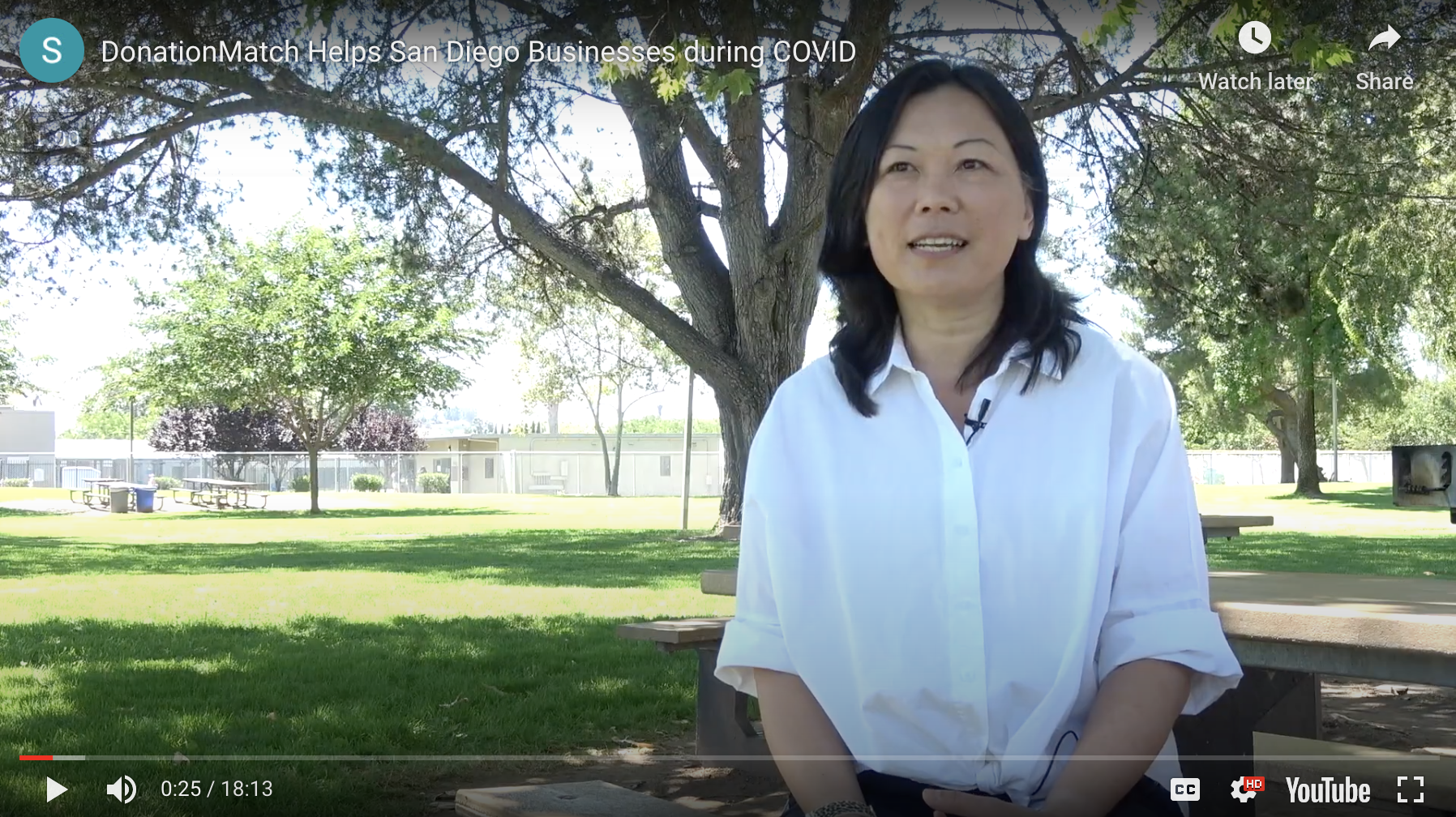
Thank you fo the San Diego Business & Nonprofit Crisis Support Network for aggregating resources for local organizations. Their spotlight video highlighted DonationMatch Co-founder Renee Zau, who is offering pro bono services of up to an hour per organization (business or nonprofit) to assist with in-kind (unpaid) marketing strategy and fundraising event coaching as we adjust and recover from COVID-19. To apply, use the link in the Free Consultants and Coaches section of the San Diego Business & Nonprofit Crisis Support Network website.
6 Expert Sales Strategies Nonprofit Fundraisers Need to Steal
Guest Post By Tatiana Morand, Content & SEO Manager at Wild Apricot by Personify
You might think that your fundraising work is worlds away from that of Fortune 500 sales professionals. You’re cold-calling in hopes of a double-digit gift, while they’re landing six-figure deals over a boozy lunch.
But if you’re dismissing the strategies they’re using, it might be time to take another look.
You both have the same task: convince your prospects that your mission is a good investment.
So, before you pull your hair out trying to think of new “viral” fundraising strategies, take a look at how sales pros successfully pitch their products and consider how this could translate into funding for your organization.
1. Make It Personal.
Research has shown that consumers prefer personalized sales experiences. With so many analytic tools available, individualized recommendations have become the norm. Just think of the way Netflix curates “Recommended For You” selections based on your viewing history.
Mailing out stock donation envelopes doesn’t cut it anymore. Your donors and supporters expect communication that shows you’ve taken the time to get to know them.
That doesn’t mean you have to send handwritten notes for every gift. Instead, identify easy things that you can customize a bit more.
Possible Actions:
Use personalization fields (merge tags) to address donation letters and emails.
Send individualized welcome and thank you emails to new donors.
Handwrite thank you letters at major donors. Affirm their sense of importance by including specifics about the use of their gifts.
Create drip email campaigns to ask donors questions and elicit replies. Drip emails can be triggered by actions or criteria in your database to make them seem like personal inquiries.
Look for commonalities and create targeted segments. Let’s say you work for a literacy organization and realize that 10% of your donors and members are licensed educators. Why not send them unique volunteer opportunities perfect for teachers? Figure out how to leverage their common experience for your organization’s benefit.
2. Go Beyond Your Direct Connections.
A survey by LinkedIn found that consumers are five times more likely to engage with a sales professional if an introduction is made through a shared connection. In your case, this could mean asking your current donors to invite their friends and families to a fundraising event or encourage your current followers to share a post about a new campaign.
Possible Actions:
Start a peer-to-peer fundraising campaign via your current supporters to grow your network.
Look at your executive leadership team’s LinkedIn connections and make a prospect list.
…And then move to your board and do the same!
Create content for your board members to post on their social media feeds. For example, ask them to share a link to a blog post or event announcement.
Familiarize yourself with the community through local chambers of commerce and networking groups. Learn who might want to help your organization.
Introduce yourself to local media outlets. Offer to write articles about the nonprofit sector or mission-related issues.
Pay for your leadership staff and board chair to attend a few key events, such as trainings, conferences, or even other fundraisers. This allows them to network with philanthropists and other nonprofit leaders in the community.
3. Be Confident.
Another essential way sales professionals build trust is through professional competence. They speak with conviction about the products and services they’re offering.
We know that people, unfortunately, perceive nonprofits as dysfunctional or financially unsound.
As a result, you may face an uphill battle when speaking about your organization’s stability and success.
Possible Actions:
Refine a succinct and clear elevator pitch, and professional and consistent branding.
Train your employees and board members to give statistic-backed responses to questions.
Equip your employees and board members with case study examples that prove your organization’s success.
Prepare a 5-10 year strategic plan that can be shared externally. This shows you’re confident that you’re in it for the long haul.
4. Try Out This Tactic.
It seems counterintuitive, but some of the most successful sales pros encourage customers to explore competitors.
While it may feel terrifying or downright foolish to lead potential donors away from your organization, this type of honesty shows you’re so confident that you know they’ll ultimately choose you.
More importantly, it shows that your primary concern is the mission, which will reassure your prospects.
This may mean discussing the other organizations in your area that have similar programs. This openness lets prospects know that you have a mission-first mindset. Potential supporters will appreciate that you care about the greater good, not just the good of your particular organization.
(But hopefully you’ve sold them on why you’re the best option!)
Possible Actions:
Understand others in your nonprofit niche.
Develop your value proposition so you can effectively compare and contrast your organization with others.
Foster and emphasize collaborative partnerships with other nonprofits, so it’s clear you’re willing to share resources if it leads to greater impact.
5. Think Outside the Box.
When it comes to fundraising, it feels safe to play to the audience we already have a relationship with. However, creating new donors is necessary for organizational growth. Businesses are always trying new ways to expand their market share and reach new populations. That means taking risks and allocating resources to new products or novel marketing approaches.
For your nonprofit, this might mean investing in online outreach to engage younger donors or trying a new theme or venue for your annual fundraiser.
Who knows… you might find a huge new base you didn’t know existed!
Possible Actions:
Dedicate a small portion of your budget to experimentation.
Track results in terms of cost-benefit as well as engagement and retention.
Try out a few different fundraising ideas.
6. Less Is More.
One of the most important characteristics of a successful sales pro is tenacity. The same goes for a nonprofit fundraiser.
You’re probably accustomed to being hung up on and just picking up the phone with a smile on your face and trying again and again… and again.
But some sales pros suggest backing off and giving the prospect some space. When it comes to donation calls, less can be more.
So, equip your prospective donors with everything they need to know about your organization within the first couple of touchpoints, including ways to give. After that, the ball is in their court.
This strategy has two benefits: they’ll feel empowered, and you’ll be freed up to pursue other new supporters.
Possible Actions:
Prepare call scripts, sponsorship packages, and presentations that include a clear expectation of follow-up communication and call to action. (i.e. “We will send you an email and follow up in a few days.”)
Donors can also feel empowered by a challenge. A recent study shows that creating fundraising challenges (for example, saying “A generous sponsor has committed to give $1000 if you and your coworkers raise $2000 by the end of the month”) can positively influence giving. These types of fundraisers appeal to humans’ competitive nature and makes donors feel urgent and integral to the operation.
At the end of the day, a top sales executive and a fundraising manager aren’t that different (although the beverage selection may be a little better at one of their offices...).
To get yourself started, think of something you were recently compelled to purchase and consider what made you make that decision. How can you evoke that same feeling or experience for your potential donors?
Start thinking like a sales pro, and it might just pay off.
The views and opinions expressed are those of the author and do not necessarily reflect the official policy or position of any other agency, organization, employer or company.
5 Podcasts for Charity Fundraising Advice

As a nonprofit professional (or professional volunteer), hosting a charity fundraiser is a lot of work. It requires organizing, marketing, event planning, sales, people management, and so much more. As fundraisers, we are always looking for improved methods for making our events more cost-effective and profitable. Here are 5 podcasts to help make the efforts of a nonprofit event planner a little easier, or more effective. These podcasts are in no particular order and range from 30 minutes to over an hour in length per episode. It can be great to fit in these helpful tips during a lunch break, long drive, or even during a daily workout routine.
1. The Classy Podcast
This weekly podcast has stories from leading founders and executives in the social sector who hope to inspire the next generation seeking to drive change.
2. Events with Benefits
Hosted by three longtime event fundraising professionals with 50+ years of combined experience, this podcast seeks to help nonprofits achieve greater success in their fundraising events with less effort. The episodes feature special guests from all different sectors of the nonprofit industry who share their biggest lessons learned, including nonprofit attorneys, directors of events that raise over $1 million or more, benefit auctioneers, and technology companies.
3. CauseTalk Radio: The Cause Marketing Podcast
This weekly podcast, hosted by Joe Waters and Megan Strand, keeps you up to date on the world of cause marketing. The podcast covers trends, tactics and news related to cause marketing and corporate-nonprofit partnerships.
4. Driving Participation Podcast
This podcast talks with marketers, fundraisers and consultants in order to explore what’s been successful for schools, nonprofits, and associations, in order to attract the right people, maintain their excitement, and encourage them to give back.
5. Raise and Engage
This podcast if for nonprofit professionals and covers the latest trends and hot topics. With people speaking from the social good community, it’s designed to help listeners in doing more for their cause.
Questions To Ask When Holding an “In-Store Fundraiser”

In-store fundraisers (a.k.a. on-site fundraisers, restaurant nights, or giveback campaigns) can be a lot of fun and excitement for both hosting venues and the organizations inviting supporters to dine or shop. Before doing one for the first time with a new venue or organization, it's a good idea to get these details clarified in order to set expectations for both sides.
1. What percentage of sales will be donated to the charity?
It is quite common for a store or restaurant to donate around 15%-25% of sales, or a specific dollar amount per package or service sold. However, percentages can vary, and there could be exclusions, such as alcohol, gift cards, or specific product lines. Make sure to confirm the timeline of the event, whether donations will apply to sales all day or only during certain hours, and if there is a minimum number of guests or total sales required for payout.
2. Can the event be held over the weekend?
It is very common for a restaurant to hold giveback fundraisers between Sunday-Thursday, so as to avoid their busiest times during weekends. Stores may have similar policies depending on their sales and other special events as well. Consider exploring other creative options, such as a late brunch or early lunch for a restaurant not normally open in the morning, or even longer-term fundraisers focusing on online or gift card sales for up to a month or more.
3. Will the percentage donated include all sales, or only those from guests referred by the organization?
Be sure to clarify whether the percentage of sales to be donated will be limited to only those who bring in a specific flyer, use a code, or mention the recipient organization, or all sales during the time period. It is also best to find out whether coupons and other promotions can be used during your event and/or affect the amounts you earn.
4. Does the percentage of sales include both food and drink items? Does this include alcoholic drinks as well?
Depending on the restaurant, venues may only donate a percentage of food sold, some include both food and non-alcoholic drink sales, while others will donate a percentage of everything sold. Partnering to create a signature drink or dessert for the event can also drive additional sales-based donations.
5. How will the business help market the event? And what type of promotions can the organization do?
What marketing materials will the restaurant provide to the organization? It’s important to think ahead about how to make promotion easier through social media, flyers, e-mail newsletters, message boards, and online calendars. It is common for a restaurant to provide the charity with a flyer to be used for tracking sales and promotion. However, many businesses will not allow the charity to distribute the flyer immediately outside the venue during the time of the event, such as in the parking lot, so it's necessary to market the event in advance. If the fundraiser is at a store or boutique, find out if shoppers can arrive early and put items on hold to purchase during the event. Ask also if purchases can be made online, which would invite sales from out-of-towners.
7. How can the event be personalized?
One of the best ways to increase event attendance and traffic is to be creative and feature something unique, such as teachers cooking or serving food; an officer, director, or the school band performing; a special discount; or a raffle for a coveted prize or experience, donated by the venue in conjunction with the charity. If there are any limitations based on insurance or capacity, be sure to figure those out ahead of time, too!
6. How will the organization receive the donation?
After all sales are tallied, when and how will the organization be receiving the donation? It’s common for a restaurant to prepare a check for pickup within a few weeks from the date of the event, mail it, or even electronically deposit the funds into the organization's account. Some states have deadlines for how quickly funds must be transferred, so it's always a good idea to refer to your state's Attorney General's office for help.
**********
Great partnerships begin with a clear understanding of what each partner brings and what to expect. We hope these ideas enable you to ask the right questions, clarify details, get creative, drive more sales, and raise more money!
Why Both Charities & Companies Can Benefit From Product Donations

After months of planning for an upcoming charity event, now comes the time where you have to reach out to multiple businesses and ask for product donations or auction items for the event. As a resourceful problem solver, avoid becoming timid or hesitant when you make the request, feeling like you’re asking the business for a handout. Instead, it’s important to realize that a product donation actually does benefit the business!
Having an item showcased at an event is an excellent marketing opportunity for businesses, allowing both you and the company to share in a win-win situation. Understanding that both the nonprofit and the business can win is the key to receiving a successful amount of product donations. Below are some additional tips that can help to prepare as you approach a business asking for product donations or auction items.
Do Research Upfront
Try to first learn what your attendees would prefer to purchase and then find businesses offering those items. This ensures a better fit for both the attendees and the donor. Also, make sure you understand the demographics (age, gender, location, etc.) of the people attending your event. Then when speaking to the businesses, you’ll be able to confirm that the event attendees are their ideal target audience.
Promote Social Good
With the topic of social good on the horizon, many companies are beginning to realize that supporting a cause can provide the business with successful ROI. A study by Cone Communications found that 87% of Americans will purchase a product because a company advocated for an issue they cared about. A business is not only receiving the opportunity to support an important cause, but is also being offered the chance to promote their product or company to hundreds of people at the event, with very little effort needed on their part.
Prepare a List of Benefits
Before speaking to the business, be prepared by compiling a list of benefits you’re able to provide to the organization. For example, the company will benefit by having a room full a attendee at the event that are their ideal target market, while being able to benefit from a low cost method of marketing. They will also benefit by being one product among a limited amount of featured items or businesses at the event. This will help the brand in standing out as a featured product. Don’t forget to offer the opportunity to help promote the brand through social media or provide the company with a social media image or video post-event. Companies would also appreciate receiving links to their site from the event website. Feel free to ask what the company values that you can deliver. It often doesn’t cost more to deliver an additional benefit to the company and it could compel them to increase their donation.
If you can follow these steps when approaching a business regarding product donations, then you should be able to achieve a more successful outcome with a win-win for both your nonprofit and donor businesses.
DonationMatch Launches GiveBack Program for In-Store Fundraising
The team here at DonationMatch is thrilled to announce that we recently launched a new online platform, The DonationMatch GiveBack Program! This new product connects restaurants and stores with nonprofit organizations to host in-store fundraisers. The GiveBack Program will be offered as a feature on our main platform, DonationMatch.com.
The GiveBack program was created to help any restaurant, brewery, winery, store, service, or online company looking to donate a percentage of sales to nonprofits and causes. The platform makes companies available to causes that are seeking fundraising options, providing easier scheduling and marketing for the businesses.
Restaurant fundraisers are popular events for charities and schools, because a percentage of the sales earned during that night are donated to a nonprofit hosting the event. Fundraisers have also been shown to be a great marketing tactic for businesses, by providing another method for gaining new clients and sales, while giving back to the local community.
The DonationMatch GiveBack tool contains many exciting features to assist with organizing an in-restaurant fundraiser. Some of the program features include:
Giving local fundraising leaders direct access to eligible programs
Easy event scheduling
Online marketing tools
Event tracking and reporting
Customizable automated reminders and workflow tools
Detailed records of event fundraising history
Ability for companies to view event fundraising records for donation decisions
Through the easy-to-use platform, restaurants can receive fundraiser requests, be able to provide event promotional tools to charities, and view analytics post-event.
“We are very excited to launch our latest product, the DonationMatch GiveBack Program, said Renee Zau, CEO at DonationMatch. “Current DonationMatch clients had expressed a need for a tool that efficiently manages and streamlines the process of hosting restaurant fundraisers.” Companies who contributed to the design and creation of the GiveBack program include: Buffalo Wild Wings, Dream Dinners, Picaboo, and Henebery Whiskey.
Zau is pleased to launch the GiveBack Program to provide even more functionality to the DonationMatch platform. Companies interested in trying out the new platform can sign up online through DonationMatch.com and may begin using the Starter option free of charge.
About DonationMatch: DonationMatch is a social enterprise that creates online cause marketing software for companies and nonprofit organizations. Since 2010, DonationMatch has facilitated in-kind gifts worth more than $34 million. Co-founded and led by CEO Renee Zau, DonationMatch was recently named to the SheEO "Top 25 Ventures" list for U.S.-based companies in 2017.